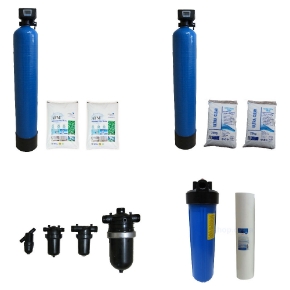
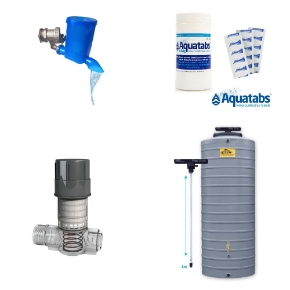
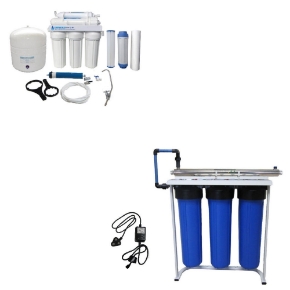
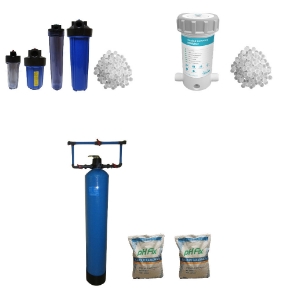
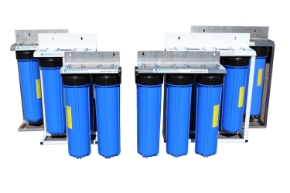
Bronze Series 50 Litre AFM® Activated (Glass) Filter Media Vessels
What is AFM®?
AFM® Activated Filter Media is a direct replacement for sand, doubling the performance of sand filters without the need for additional investments in infrastructure. AFM® resists biofouling, bio-coagulation and transient wormhole channeling of unfiltered water and never needs to be recharged or replaced.
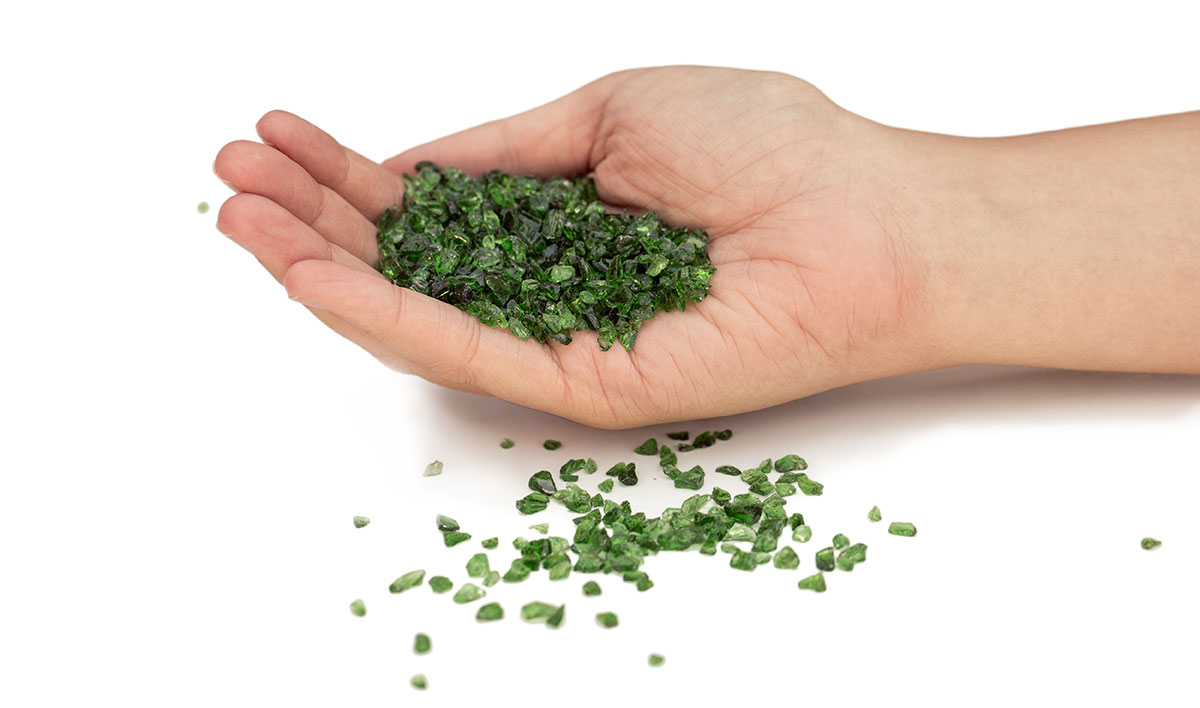
AFM® is a highly engineered product manufactured from a specific glass type, processed to obtain the optimum particle size and shape. It is then exposed to a 3-step activation process to increase its surface area by up to 300 times for superior mechanical and electrostatic filtration performance.
AFM Glass Media Vessel is used to capture sediment, dirt, rust and other particles from water.
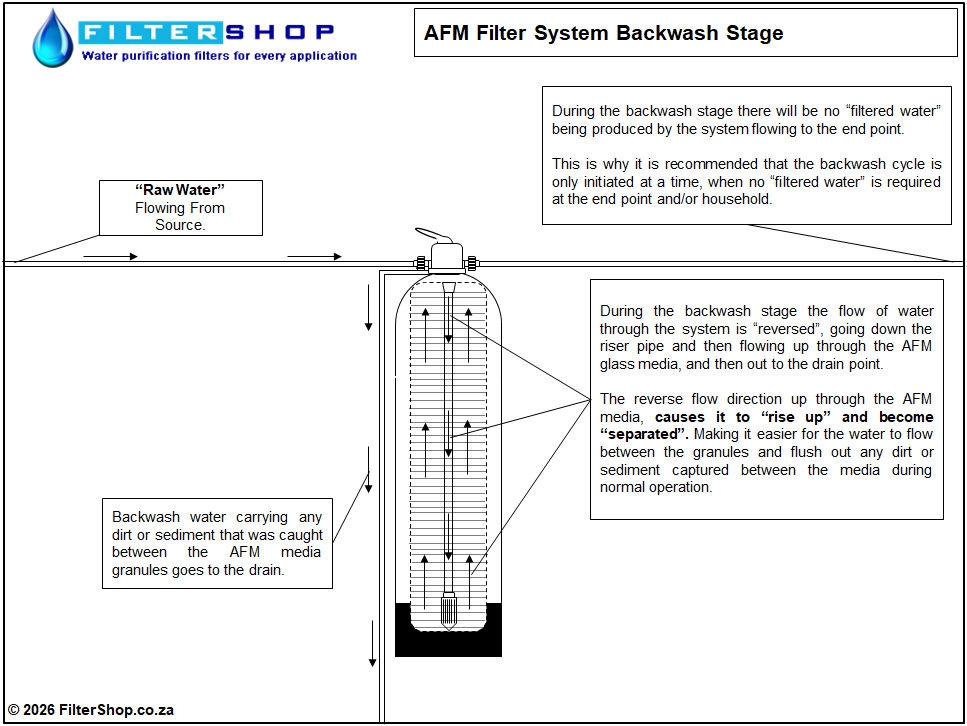
The AFM Glass media is reusable and can be backwashed to remove the particles captured inside.
The AFM Glass Filtration media replaces traditional Silica Sand Media. Filtering to a much finer level, as well as having a much longer life span than typical silica sand media.
The AFM Glass media will filter the water down to around 3 microns (same as most "throw-away" cartridges).
To put this in perspective, look at the sizes of the following objects:
- Eye of a needle ……………………………………….1230 micron
- Dot (.)…………………………………………………………615 micron
- Table salt……………………………………………………100 micron
- Human Hair (average diameter)………………….60 micron
- White Blood Cell…………………………………………..25 micron
- Red Blood Cell………………………………………………..8 micron
- Spider Web………………………………………………...2 - 3 micron
- Bacteria (harmful)……………………………………0.3 - 2 micron
With a nominal sediment filter, 60 – 98% of all the particles larger than the specified filter micron number are removed.
AFM® benefits at a glance
- ... more than doubles the performance of an existing filtration system
- ... is not subject to biodynamic instability and will never allow untreated water to pass
- ... substantially lowers chlorine oxidation demand
- ... lowers backwash water demand by an average of 50%
- ... is expected to last for the life of the filtration system
- ... provides a quick return on investment
What makes AFM® so effective?
1. Clean, carefully selected glass
AFM® is only made from pure green and brown glass which have the necessary metal oxides to help
make AFM® self-sterilizing.
2. Ideal hydraulic properties
The raw material is ground into the optimal grain size and shape that is crucial for the outstanding hydraulic characteristics of AFM®. No dangerous glass splinters are allowed to be present in the filter material. Our manufacturing process is ISO certified.
3. Activation process
The AFM® activation process creates a mesoporous structure with a huge catalytic surface area. Sand has a surface area of 3,000 m2 per m3 but AFM® has a surface area up to 300 times greater for adsorption and catalytic reactions. Hydroxyl groups on the surface give AFM® a strong negative charge, known as the zeta potential, that attracts heavy metals and organic molecules. In the presence of small amounts of oxygen or oxidizing agents, the catalytic surface generates free radicals that make AFM® self-sterilizing.
The AFM® Glass media has several advantages over the normal silica sand used to remove particles and dirt:
- The AFM Glass Media has a life span of up to 20 years before the media needs to be replaced. Whereas silica sand only typically last 1 to 5 years before needing replacement, depending on the source water quality.
- Where silica sand and other types of cleanable/reusable filter systems typically filter water to around a maximum of 20 microns, AFM Glass media filters the water down to around 3 microns (Glass media 0.5 to 1mm).
- The AFM Glass Media is Negatively charged to help absorb some organic molecules from water.
- The AFM Glass media has a metal oxide catalysts, which helps to inhibit the growth of bacteria on the media and so increases the life span of the media.
- The Standard Glass Media Vessels, are 50, 75, and 100 Litre size vessels. Please note larger vessels are available for larger flow rate requirements, please contact us to get prices.
AFM Glass Media Grades
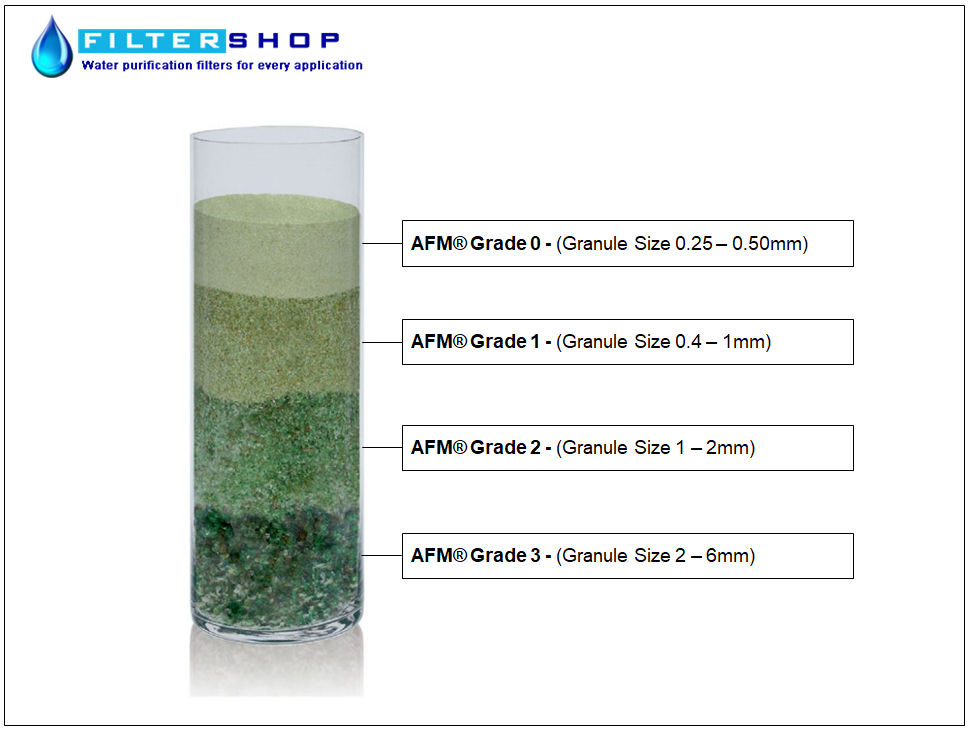
Benefits
- Reduced Backwash time. Water Savings of up to 50%, compared to traditional sand silica media
- Longer Life Span, up to 15 years. Whereas silica sand typically lasts 3 to 5 years.
- Reduced Bacteria growth (Biofilm) through negatively charged surface Area, adding to the increase in Life span.
- Made from 100% Virgin plate-glass.
- Environmentally Friendly, Glass Media is 100% recyclable.
- Filters down to +/- 5 Micron (with Grade 0)
- Particles do not clump together, allowing for easier flow without resistance.
- More uniform filtration through media, without "channels" forming in the media bed.
What is included with a Bronze Series AFM Glass Media Vessel
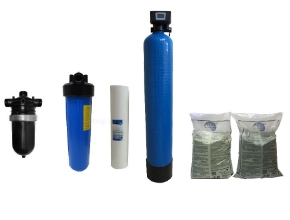
The Bronze Series 50 Litre AFM Glass Media Filter Vessel comes standard with the following:
- 1 x 50 Litre (10*54") FRP Vessel*
- 1 x F67C1 Automatic Purification Valve Head
- 2 Bags of AFM Glass Media*
- Set of Top & Bottom Strainers
- Riser Pipe
The Bronze Series of AFM Systems uses the Runxin F67C1 Automatic Purification Valve head. The F67C1 valve head's settings allow you to set the backwash cycle to be "triggered" after a set time (for example, every 5 days).
Filtershop also has several other AFM Systems series available:
What size AFM Glass Media Vessel should I get?
The Bronze Series AFM Glass Media Vessels come in 3 sizes:
- 50 Litre Bronze Series AFM Glass Media Vessel (Maximum Flow rate: +/- 1500LPH @ Maximum Turbidity of 2 NTU*)
- 75 Litre Bronze Series AFM Glass Media Vessel (Maximum Flow rate: +/- 2000LPH @ Maximum Turbidity of 2 NTU*)
- 100 Litre Bronze Series AFM Glass Media Vessel (Maximum Flow rate: +/- 2500LPH @ Maximum Turbidity of 2 NTU*)
Not sure which size AFM Glass Vessel to get for your water and application? Contact Filtershop, and we will be happy to guide you on the best size unit for your application.
*While the AFM vessels do have a liter per hour flow rating, this is only meant as a guide and is based on the turbidity level being equal to or less than 2 NTU. In situations where the turbidity level is far higher, the flow rate capacity of these units will be far less.
**Keep in mind that the "deeper" (more volume) an ultra clear vessel, the more effective the removal of sediment will be, and the less likely that some sediment will "bypass" through the media and not be captured by the media.
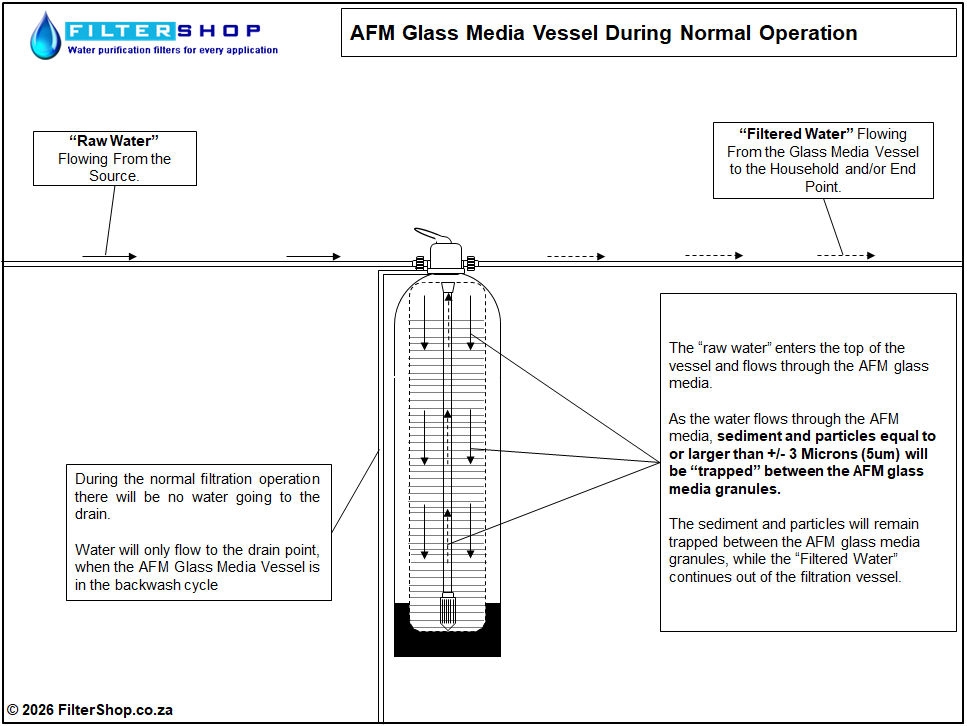
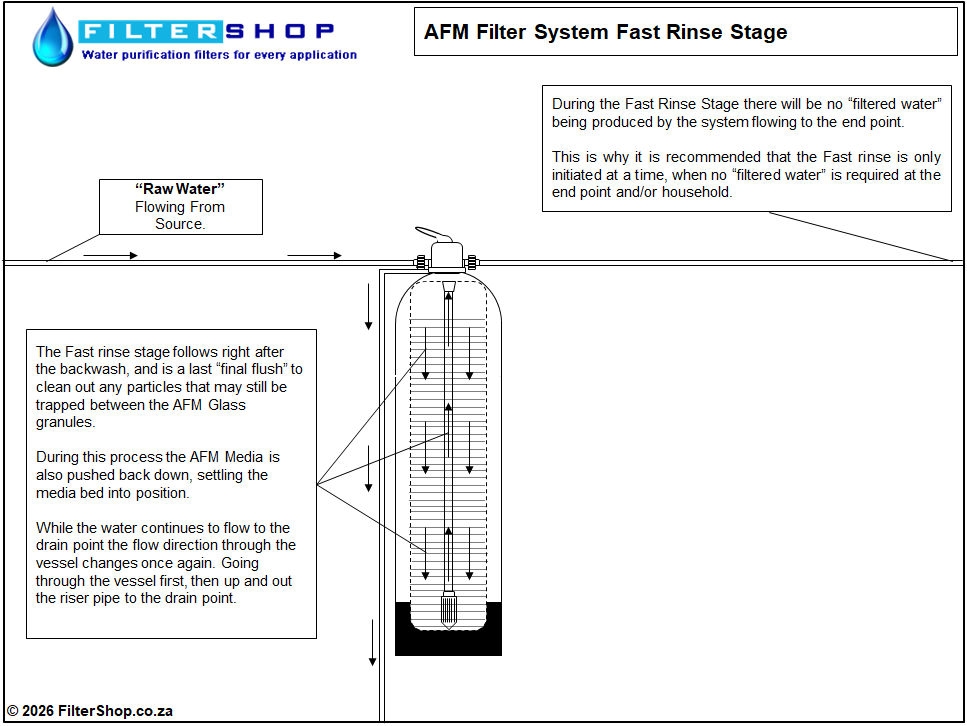
Glass Media Vessel Normal Operation and Backwashing.
During Normal operation, water flows into the top of the vessel and travels all the way to the bottom of the vessel. As the water flows down through the vessel, all the particles, rust, dirt, mud, and other sediment is captured between the glass media granules. The water then enters the bottom strainer, flows up the riser pipe, and out the top of the vessel.
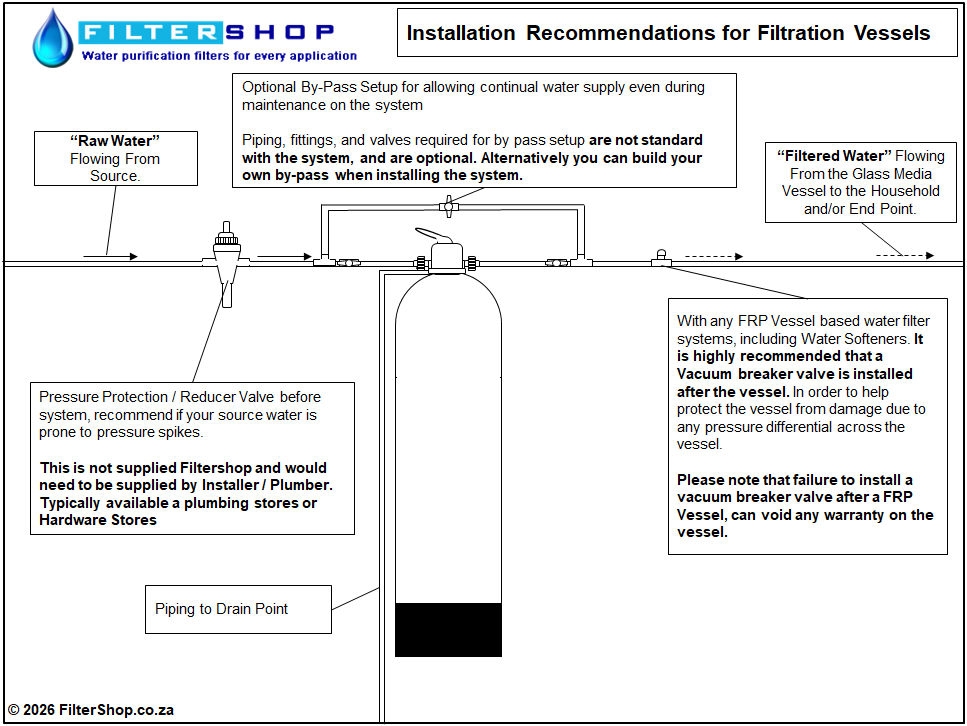
Installation Recommendations for Ultra Clear Glass Media Vessels
How to program the Digital F67C1 Automatic Valve Head
The Bronze Series of Ultra Clear Filtration systems use the Runxin F67C1 Automatic Purification Valve head. The F67C1 valve head's settings allow you to set the backwash cycle to be "triggered" after a set time (for example, every 5 days). Please note that the F67C1 Valve head does not measure or keep track of how many litres (and/or Gallons) have gone through the softener systems.
.jpeg)
Below is a video on how to program and use the F67C1 Automatic Purification Valve Head.
Warranty*:
The Bronze Series AFM Media Vessels come with a 1-year* Warranty. Please note that the warranty does not cover the filtration media, as its lifespan is entirely dependent on the quality of the source water and how regularly the backwash cycle is performed.
*Please note that the warranty does not cover damage caused by mishandling, improper installation, or in situations where the maximum operating parameters for the product are exceeded.
**Please note that with any FRP Vessel-based water filter systems. It is highly recommended that a Vacuum breaker valve be installed after the vessel. To help protect the vessel from damage due to any pressure differential across the vessel. Failure to install a vacuum breaker valve after a FRP Vessel will void the vessel's warranty.
***The Filtration Vessels Components are rated for a maximum pressure of 6 bar (90psi). If your source water has higher pressure or is prone to "water hammering" ( pressure spikes), it is strongly recommended that a pressure regulator/reducer be installed before the system. Failure to do so will void any warranty on the components for any damage caused by water pressure.
Additional Options: Pressure Gauges, Flow Meter (Rotameter), and By-pass piping Combination Options
There are a number of different fittings and additions that can be added to the Filttration Vessel System, including a By-pass, Inlet and outlet Pressure Gauges, as well as a 250-2500LPH Flowmeter (Rotatmeter).
These additions can be added separately or in a number of combinations with one another. Please see below for information on the different fitting options.
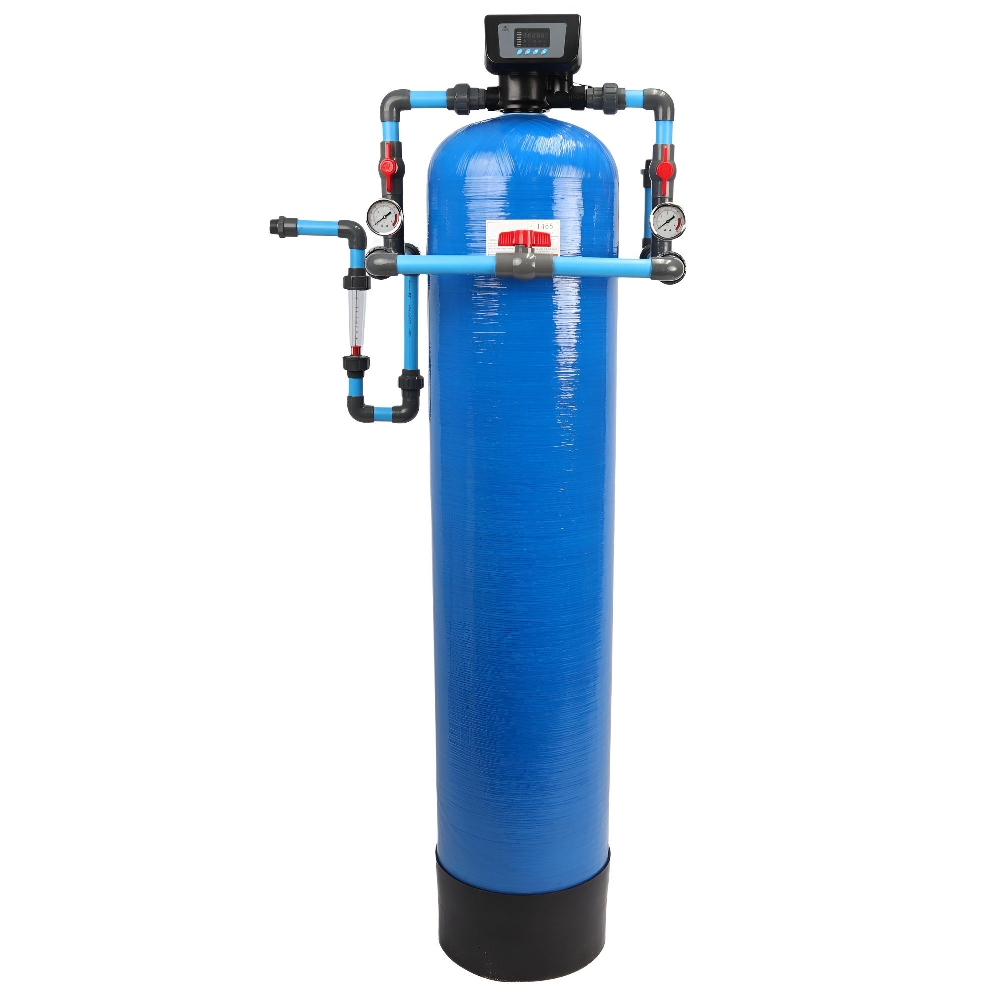
*Please note that the picture above is just to illustrate an example of the pipe work used for a fitting combination setup. Depending on the system type and the fitting options selected, the pipework on your system will likely appear different.
**Please note that these additional fitting combinations are built to order, and construction time is 2 to 3 working days from when payment has been received.
By-Pass Piping
Adding a bypass to the system allows you to divert the flow of water around the system if you need to conduct maintenance on the system.
Water Pressure Gauges
The pressure gauge allows you to monitor the pressure of the incoming source water.
This helps you to see if the water pressure coming is high enough for an adequate flow pressure through the vessel (minimum 1 bar for water softeners).
Alternatively, the pressure gauge will indicate if the water pressure is too high for the Vessel and components (maximum of 6 bar). In which case, you should then install a pressure-regulating valve before the filter system.
Flow Meter (Rotameter) 250 to 2500LPH
The Flow Meter (Rotameter) allows you to see how much draw (flow rate) is growing through the filter system at a particular time and helps to give you an idea of how many litres per hour (LPH) you are using at a given time. For Example, flow rate (LPH) in a household when one versus two showers are running.
Additional Options:
Canvas Protective Cover for Runxin Valve Head
The canvas protective cover slides over the top of the valve head, helping to protect it from moisture and dust. The canvas cover has a clear plastic front, so you can see the valve's LED display without needing to remove the cover.


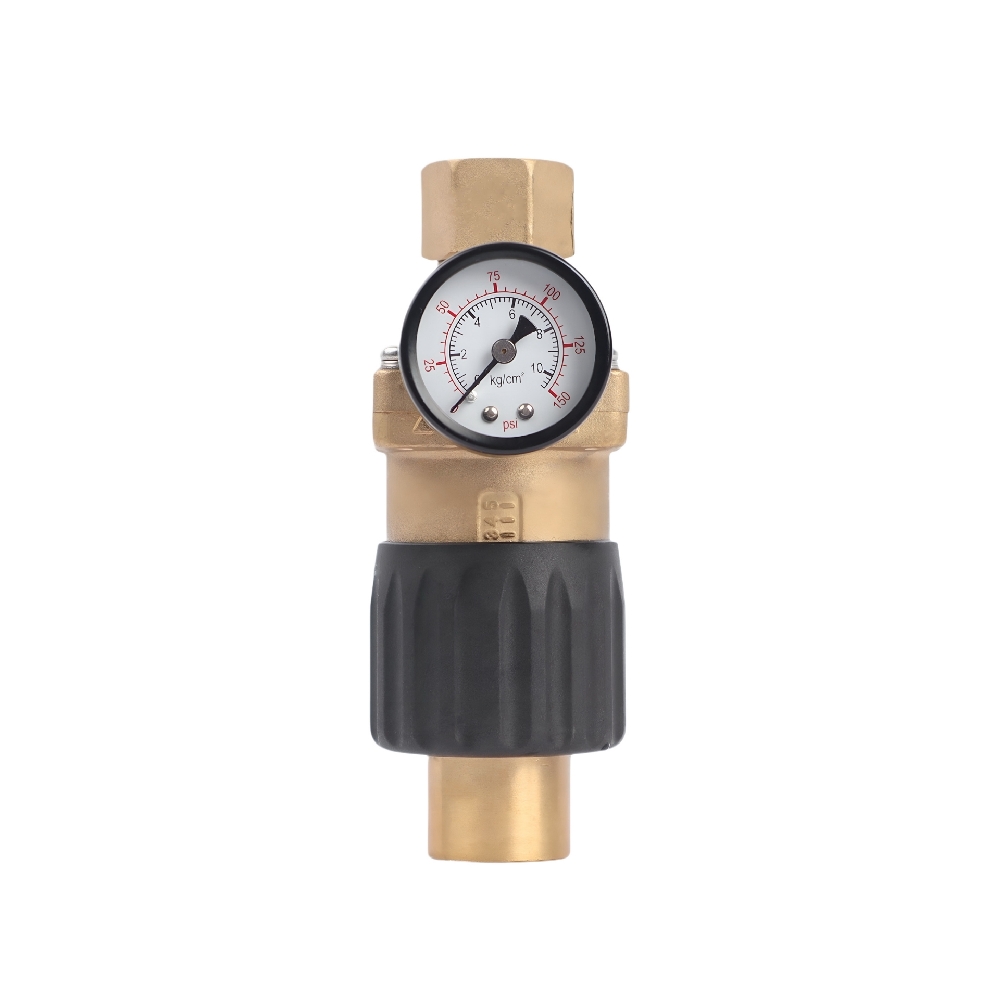
Runxin Brass Reducing Valve with Pressure Gauge
The Runxin PRV is designed to automatically reduce a higher inlet pressure to a steady lower downstream pressure, regardless of fluctuations in flow rate or inlet pressure. This ensures that downstream components receive water at a consistent pressure, enhancing system efficiency and longevity.
Constructed with high-quality materials, the valve offers durability and resistance to corrosion, making it suitable for long-term use in various environments. Its compact design allows for easy integration into existing systems without requiring significant modifications.
The valve operates effectively within a pressure range of 2 to 6 bar (0.2 to 0.6 MPa) and a temperature range of 5°C to 50°C, accommodating a wide array of water treatment applications. Whether used in reverse osmosis (RO) systems, filtration setups, or general water supply networks, the Runxin PRV delivers reliable performance.
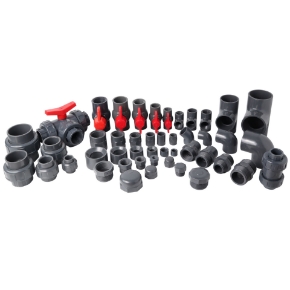
PVC Threaded and Glue Fittings
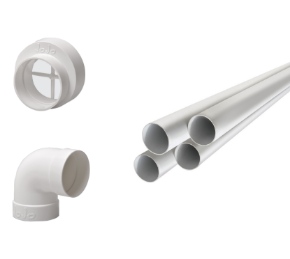
PVC(Polyvinyl chloride) fittings are used to connect sections of pipes or tubes, adapt to different sizes or shapes, and controlling the flow of water. There are two predominant types of PVC fittings, namely PVC Glue Fittings and PVC Threaded Fittings. The difference between the two is that PVC Glue Fittings result in permanent joints and PVC Threaded Fittings are semi-permanent and can be replaced. PVC Glue fittings are joined with primer and cement- a chemical solvent that melts the surface of the PVC and then quickly re-hardens to fuse the pieces together. This results in an airtight, leak-proof bond similar to what you get with welding metal. An example of such a fitting is a PVC Glue Reducing Socket which is used to join together two pieces of PVC pipes with different diameters. Another example would be a 90 Degree Elbow which is used to connect two pipes of the same diameter at an angle of 90 degrees.PVC Threaded fittings utilise a simple threaded connection whereby replaceable 'male threaded' are screwed into 'female threaded'.Male threads have a thread on the outside of the fitting and female threads have a thread on the inside. When you thread the fitting in, it compresses against the other threads.PTFE tape is used to thread these together and the proper way to assemble threaded fittings is to finger-tighten, then add one to two turns but no more. An example of a threaded fitting is a Reducing Nipple Male Threaded which is used to connect between two female threads of different diameters.
Link To PVC Fittings