Single Stage Home Water Filtration
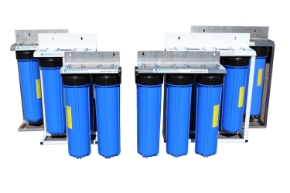
The Single Stage Home Water Filtration is a simple and inexpensive way of removing unwanted particles from the water supply to your home.
Benefits:
- All the water supplied to your house is filtered
- Preserve the natural minerals in the water
- No water wasted during filtration
- Low maintenance
- Relatively low filter replacement cost
- No electricity required
- Large filtration capacity
- Low-cost filtration solution
Keep in mind:
- These systems do not remove bacteria and other micro-organisms that may be in the water. If the water quality in your area is a real problem, you may want to consider a more advanced filtration system, such as the Complete Home Ultra Filtration Solution.
- The Filters that are used for these units need to be replaced every 3 - 6 months.
- Minerals and pesticides are too small to be removed by the filters in this filtration unit.
- You will require some plumbing knowledge and experience to install the system successfully.
- Neither of these filters removes lime (kalk), minerals or metals from the water. As a result of this, the water may remain cloudy or tinted and may not come out crystal clear.
- These systems typically filter water at a peak flow rate of 2800 liters per hour.
- The Filter housings have a maximum operating pressure of 90 psi. If you suspect that your water pressure will at any time exceed 80 psi, a pressure regulator MUST BE INSTALLED before the filter housing. This action will guard against the water pressure exceeding the maximum pressure rating. It is recommended that the pressure regulator is set at 70 psi or less.
- Protect the filter housing from freezing, as this can cause the housing to crack.
Filter Cartridge Options
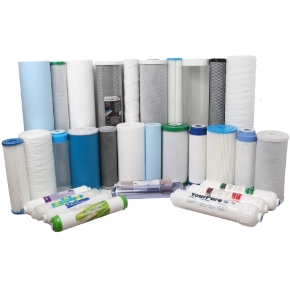
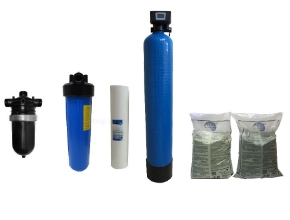
There are 9 different filters that can be placed in the Single Stage Unit:
1-Micron Sediment Filter
The 1-Micron Sediment Filter serves to remove dirt particles such as sand, mud, dust, and rust from the water. It filters the water through a very fine filter, thus effectively removing smaller dirt particles as well.
The filter may, however, cause a reduced water flow rate due to its finer filtration process.
5-Micron Grooved Sediment Filter
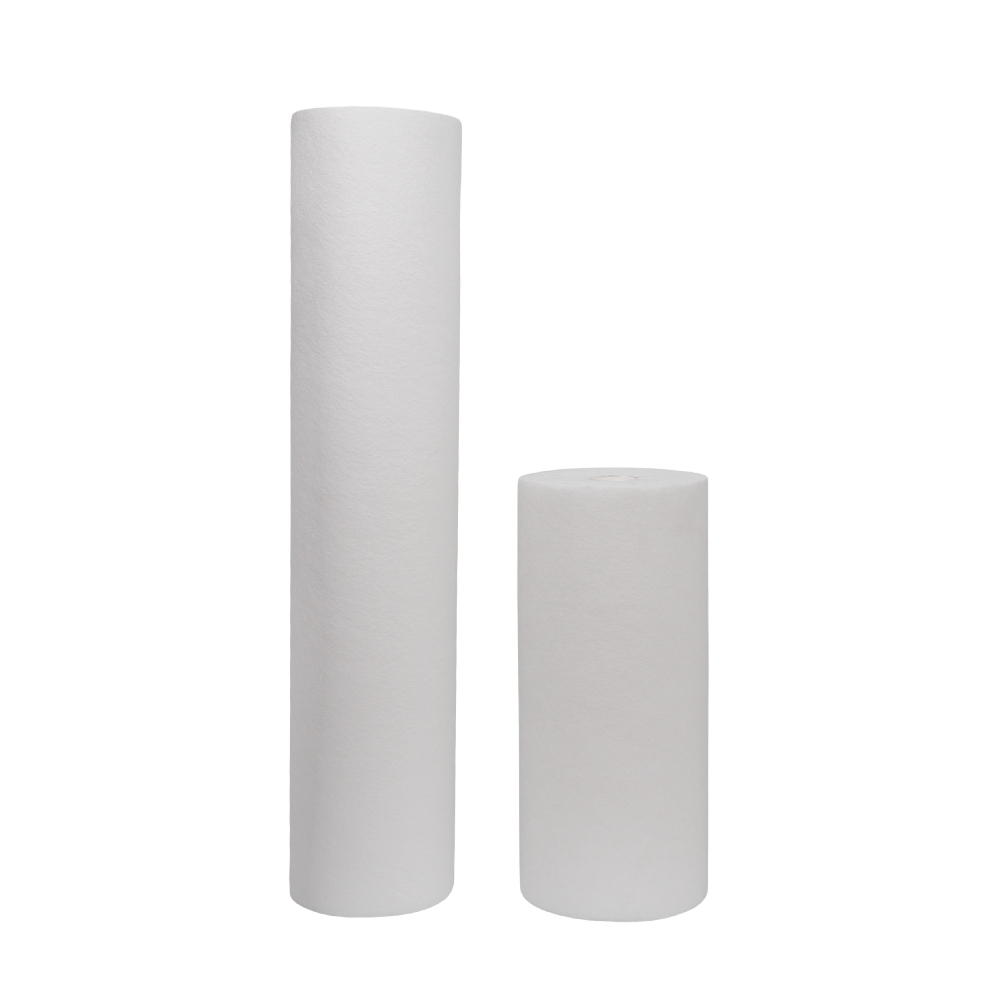
The 5-Micron "Grooved" Sediment Filter Has the exact same function as the regular sediment filter, along with the added benifit of having more surface area than the standard melted spray.
This results in a better flow-rate capacity, and a slightly higher lifespan than the standard melted spray.
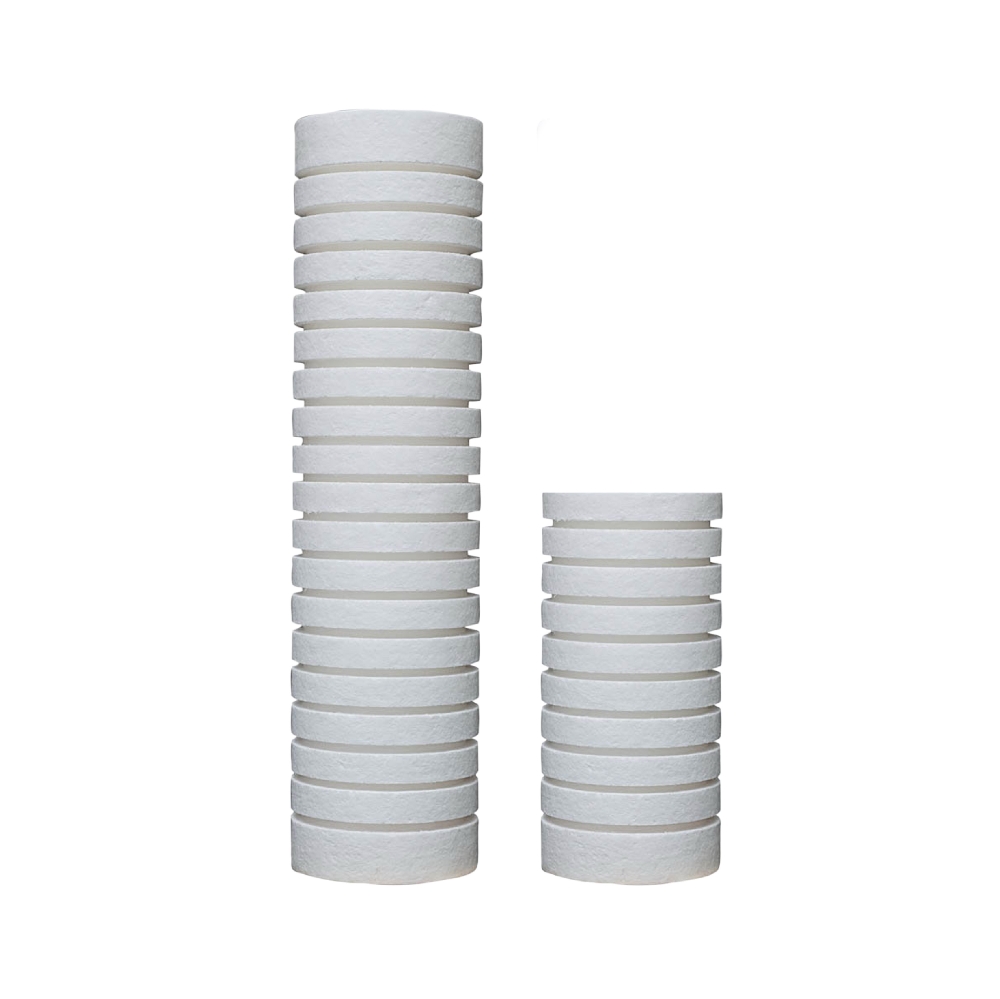
1-Micron Grooved Sediment Filter
The 1-Micron "Grooved" Sediment Filter is basically identical to the 5-Micron "Grooved" Filter, only difference is it has a better micron rating so it filters out finer particles than the 5-Micron.
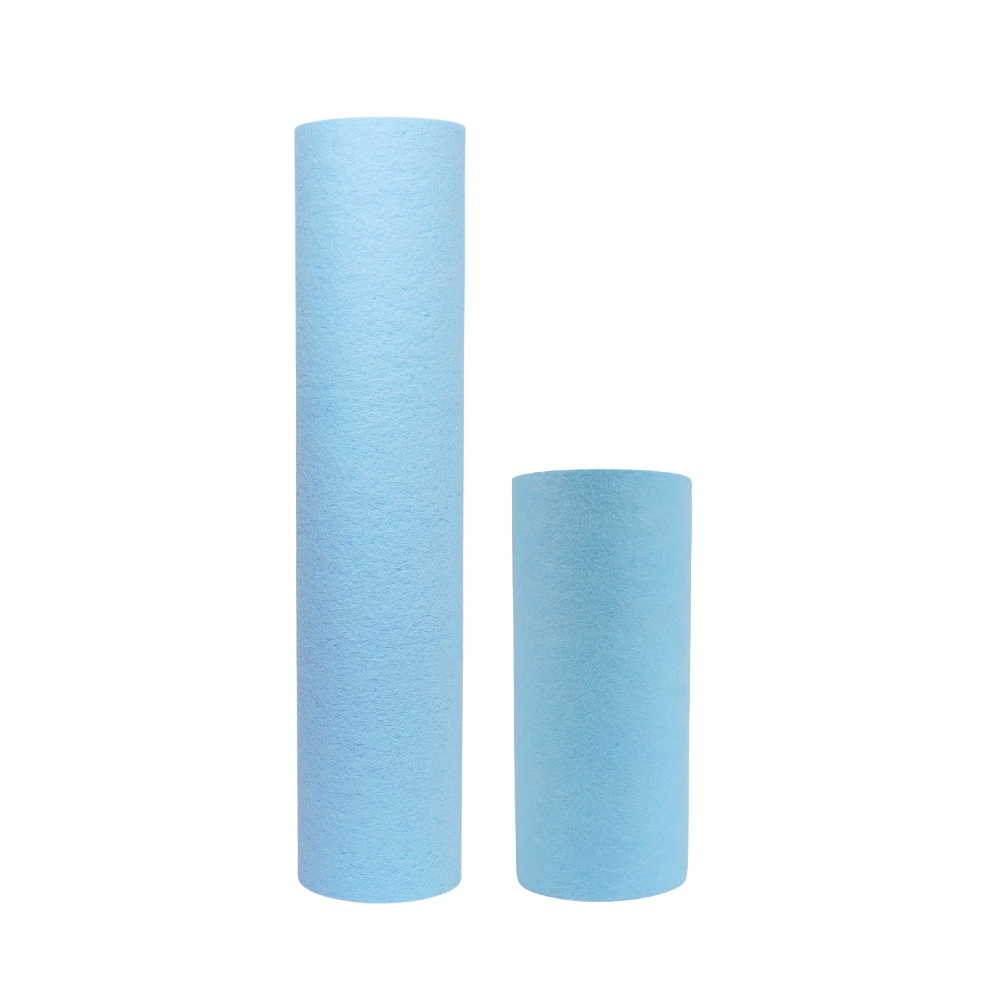
1-Micron Antibacterial Melted Spray
The Antibacterial melted spray captures dirt, sediments, visible particles, same as the previous melted spray options. However this Filter is able to capture bacteria that may be in the water aswel.
These filters also have a bacteriostatic function which helps to inhibit the growth of bacteria on the surface of the filter. It achieves this by having a silver ion antibacterial additive mixed into the material, which greatly helps the filters lifespan.
Activated Carbon Block Filter
The Activated Carbon Block Filter uses carbon technology that effectively absorbs chlorine and other organic molecules from the water. This results in water that is healthier to drink and also tastes and smells great.
Since chlorine can be absorbed through your skin and hair, it is recommended to use the filtered water for bathing and showering as well.
The effectivness of a carbon filter is based on the Iodine Number, in short, the greater the Iodine Number, the better the filter absorbs chlorine and other organic molecules.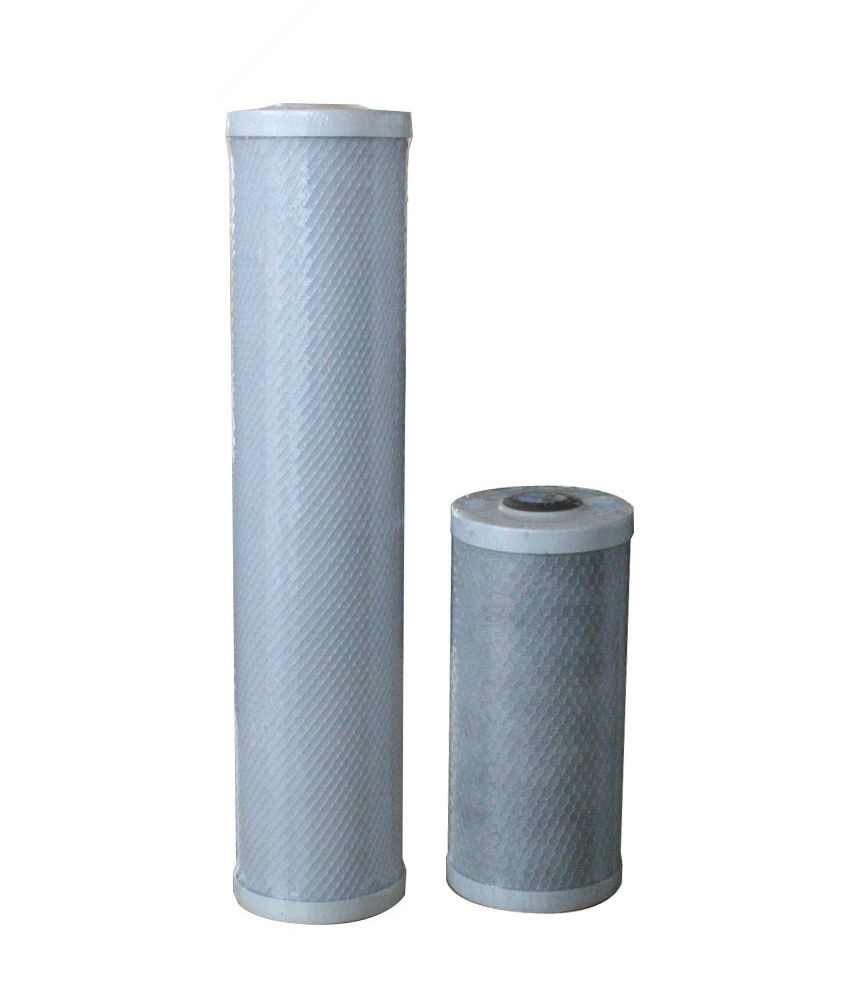
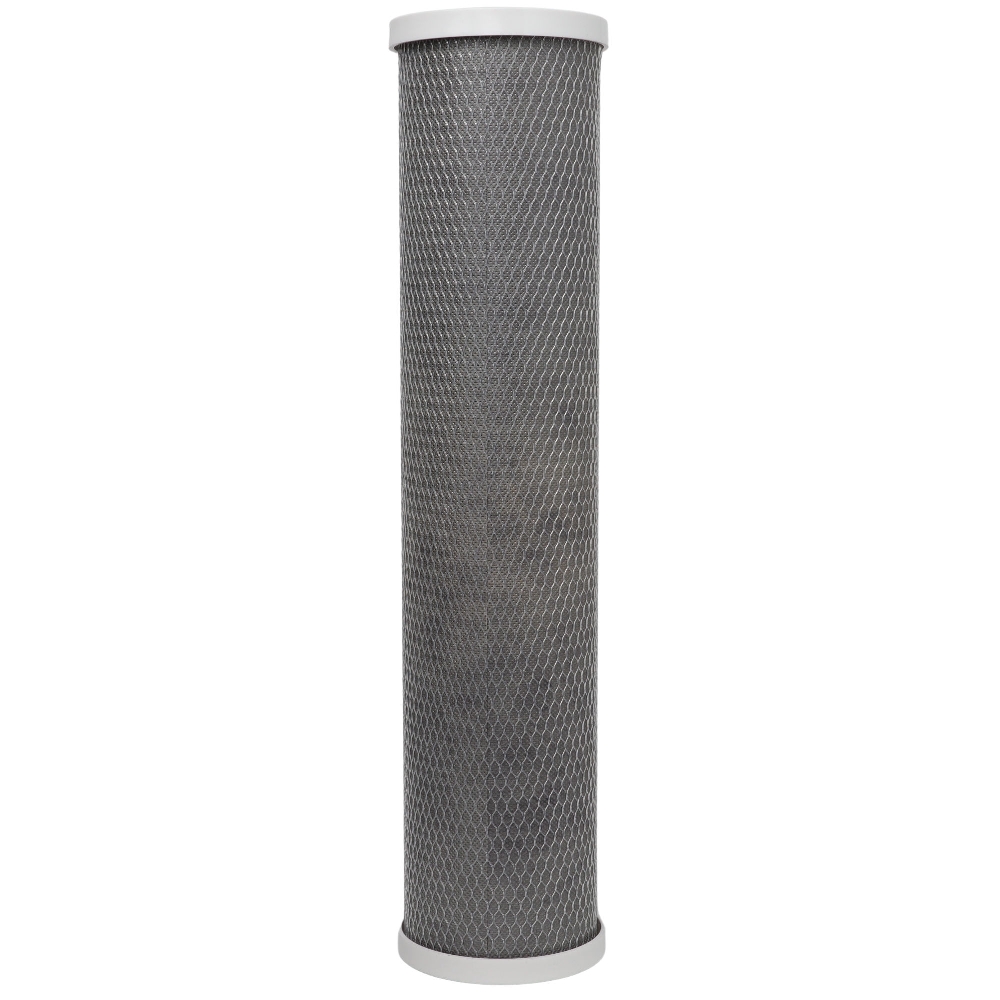
Silver Nano Activated Carbon Block
The Silver Nano Activated Carbon Block, is very similar to the regular Activated Carbon Block, but benifits from the silver that is impregnated into the cartridge to kill bacteria growth. Leading to a longer lifespan on your cartridge.
Big Premium KDF
KDF, short for Kinetic Degradation Fluxion Media, is an artificial alloy of copper and zinc that has revolutionized water treatment. The copper in KDF has a positive charge, while zinc has a negative, this results in an electrochemical oxidation-reduction reaction. This sounds very complex but the result is that KDF is effective at removing or reducing the following:
- Mercury
- Pesticides
- Arsenic
- Hydrogen sulfide
- Lead
- Chlorine
- Calcium
- Chromium
- Cadmium
- Aluminum
- Nickel
- Iron
- Rust
- Organic particles (thus removing smells and tastes)
- Pesticides
- Limits growth or bacteria, algae, and fungi
One of the biggest advantages is that a Premium KDF filter only needs to be replaced every 24 months if normal municipal water is used.
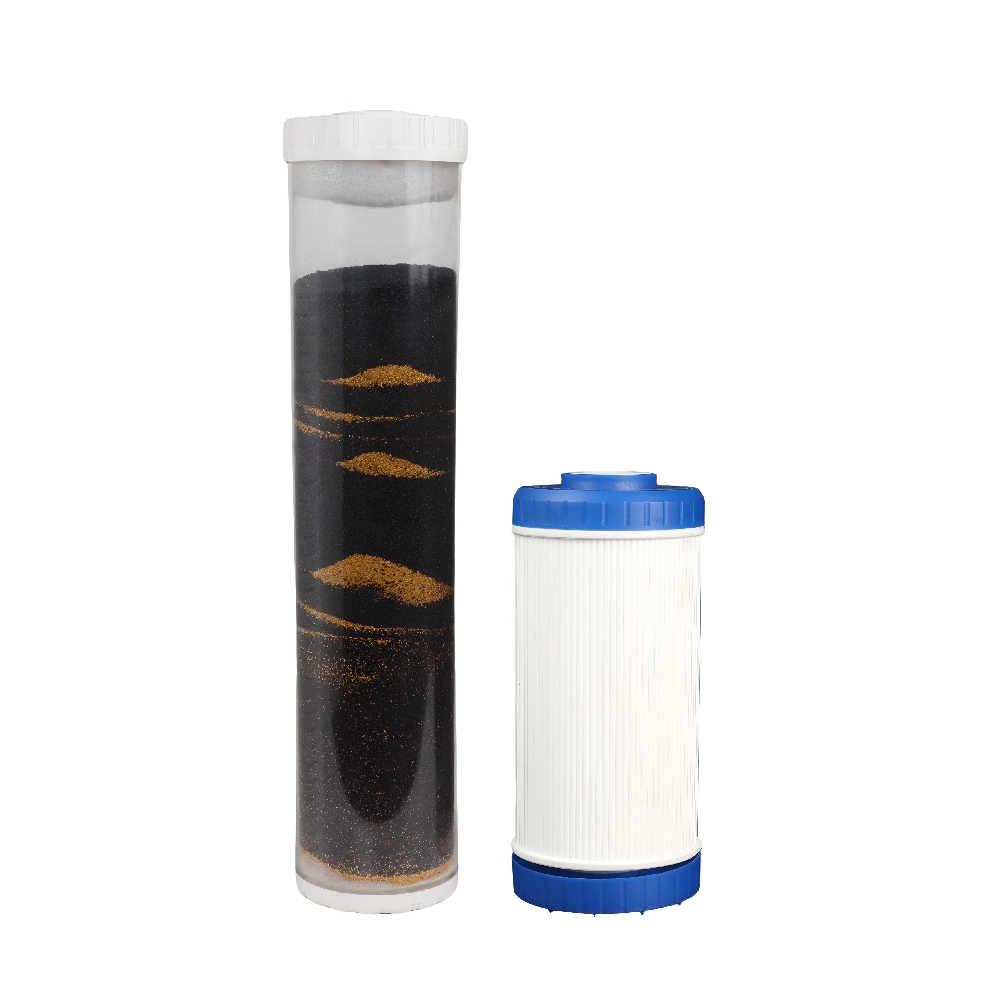
0.1 Micron Pleated Filter (Nominal)
The 0.1 Micron Pleated Filter will remove very fine particles, as well as bacteria from the water. The nominal rating of this filter means that the 0.1 micron pore size is an etimate/average size on the surface and within the cartridge itself. Also, please note that if your water has a high level of dirt present, then we would recommend placing a coarse sediment filter before the Pleated filter in order to prevent it from blocking due to sediment.
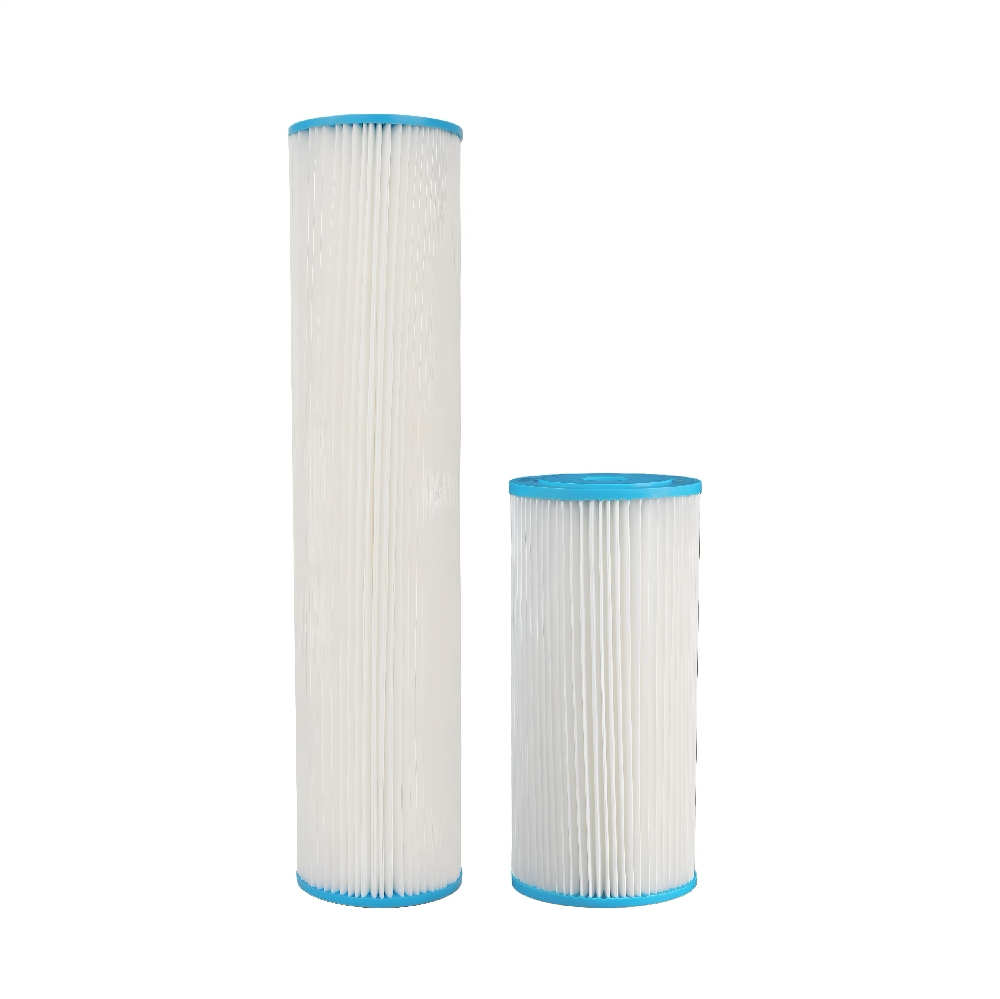 0.1 Micron Pleated Filter (Absolute)
The 0.1 Pleated Filter Absolute is the same principal as the nominal 0.1 filter. The big difference is the Absolute rating, meaning it passed lab testing with 99.9% accuracy of filtering particals equivallent or larger than the micron rating stated. *(Only available in 20" Big Systems)
.jpg)
Installation Diagram
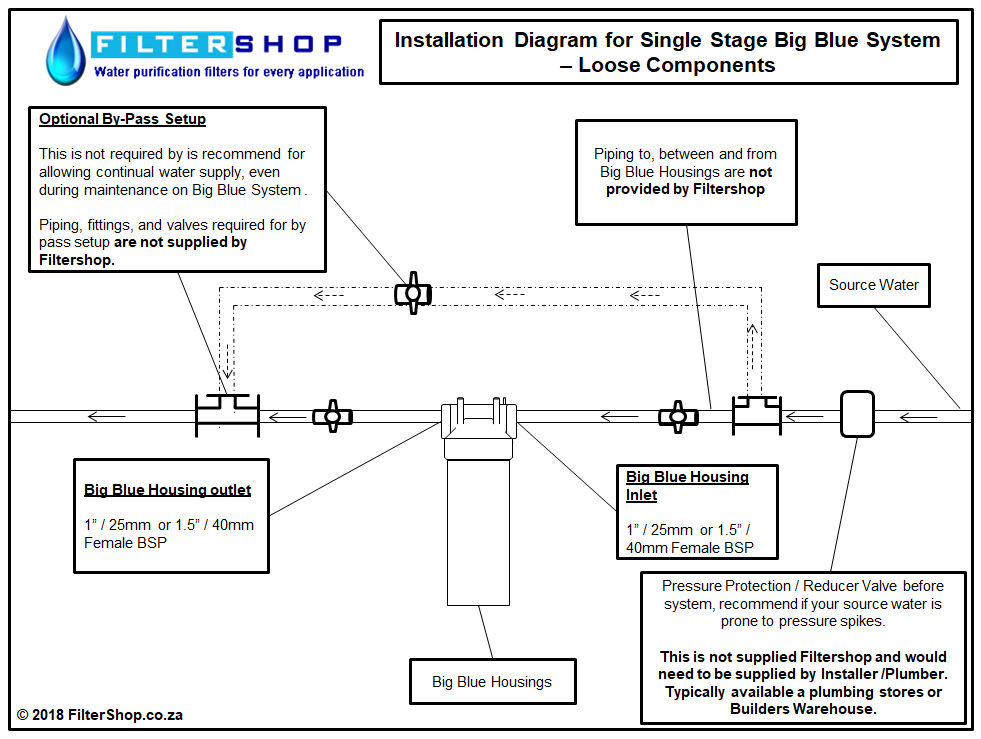
Pressure Gauges, Flow Meter (Rotameter), and By-pass piping Combination Options
There are a number of different fittings and additions that can be added to the big blue systems, including a By-pass, Inlet and outlet Pressure Gauges, as well as a 250-2500LPH Flowmeter (Rotatmeter).
These additions can be added separately or in a number of combinations with one another. Please see below for information on the different fitting options.
Please note that these additional fitting combinations are built to order, and construction time is 2 to 3 working days from when payment has been received.
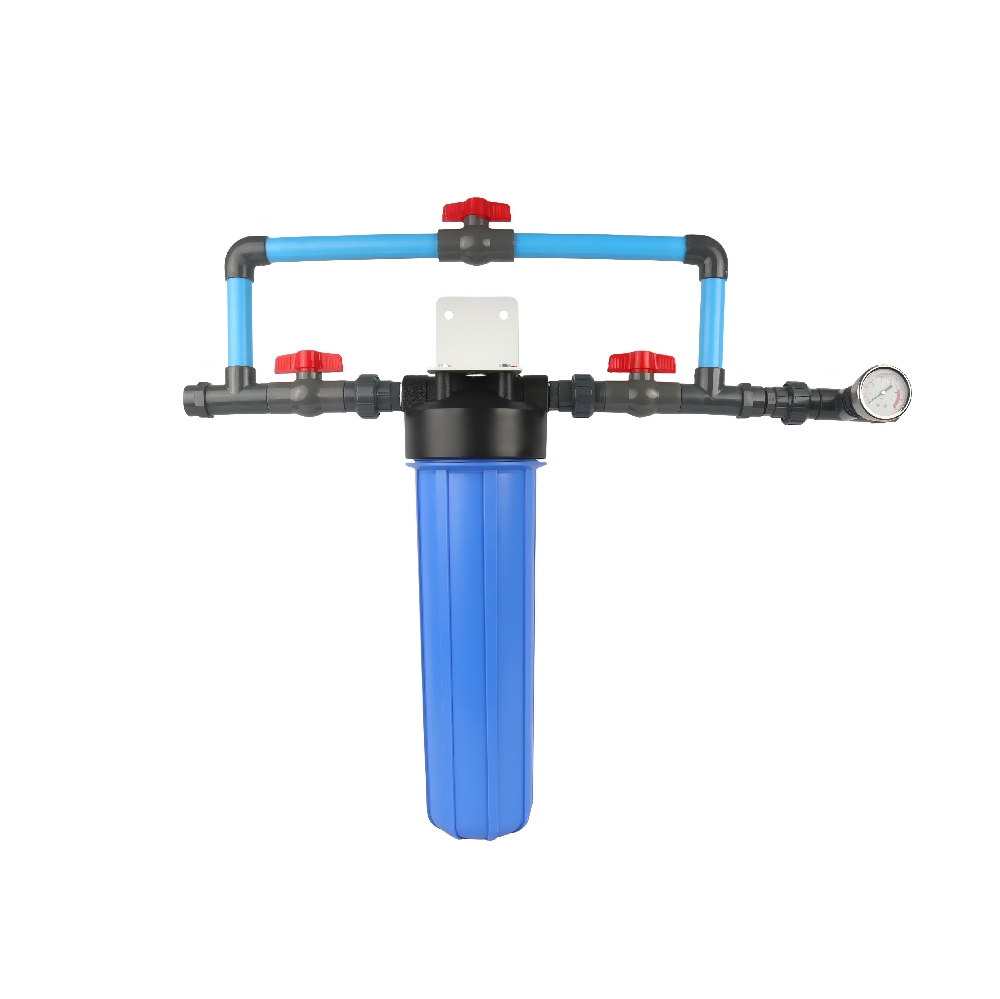
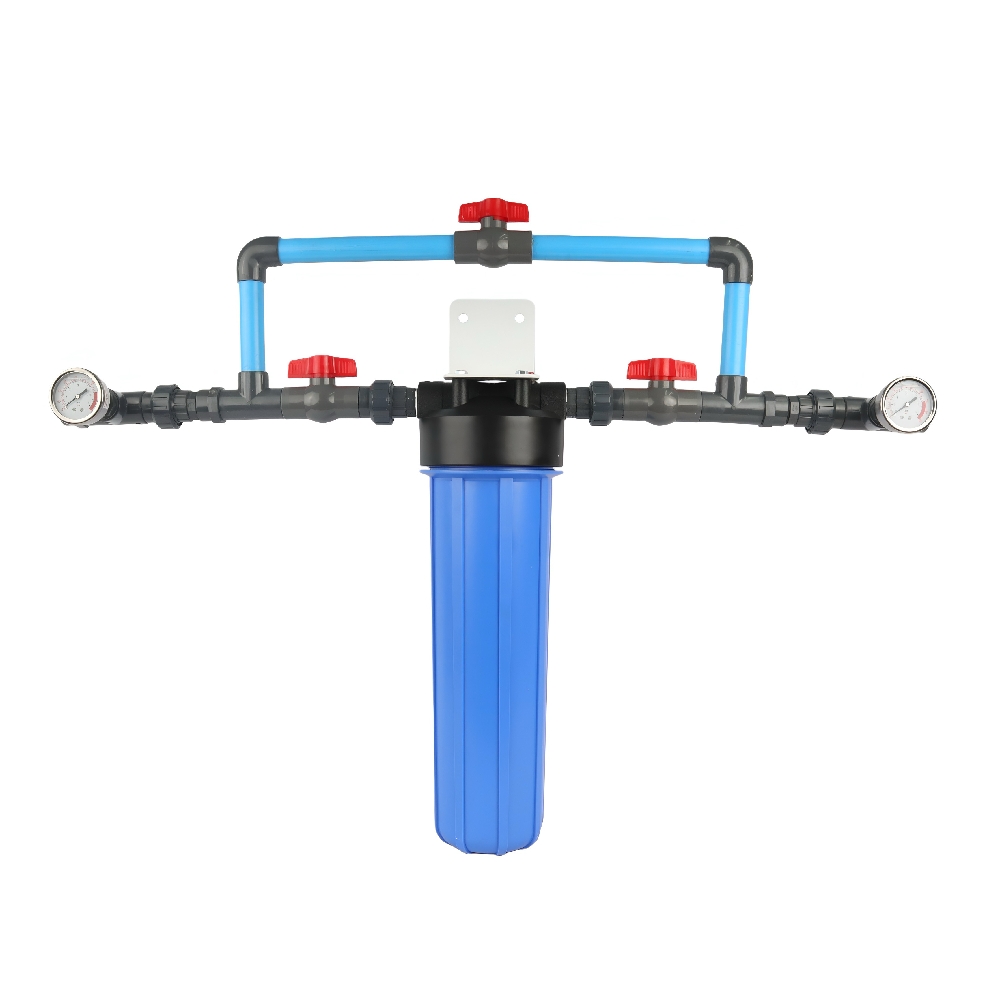
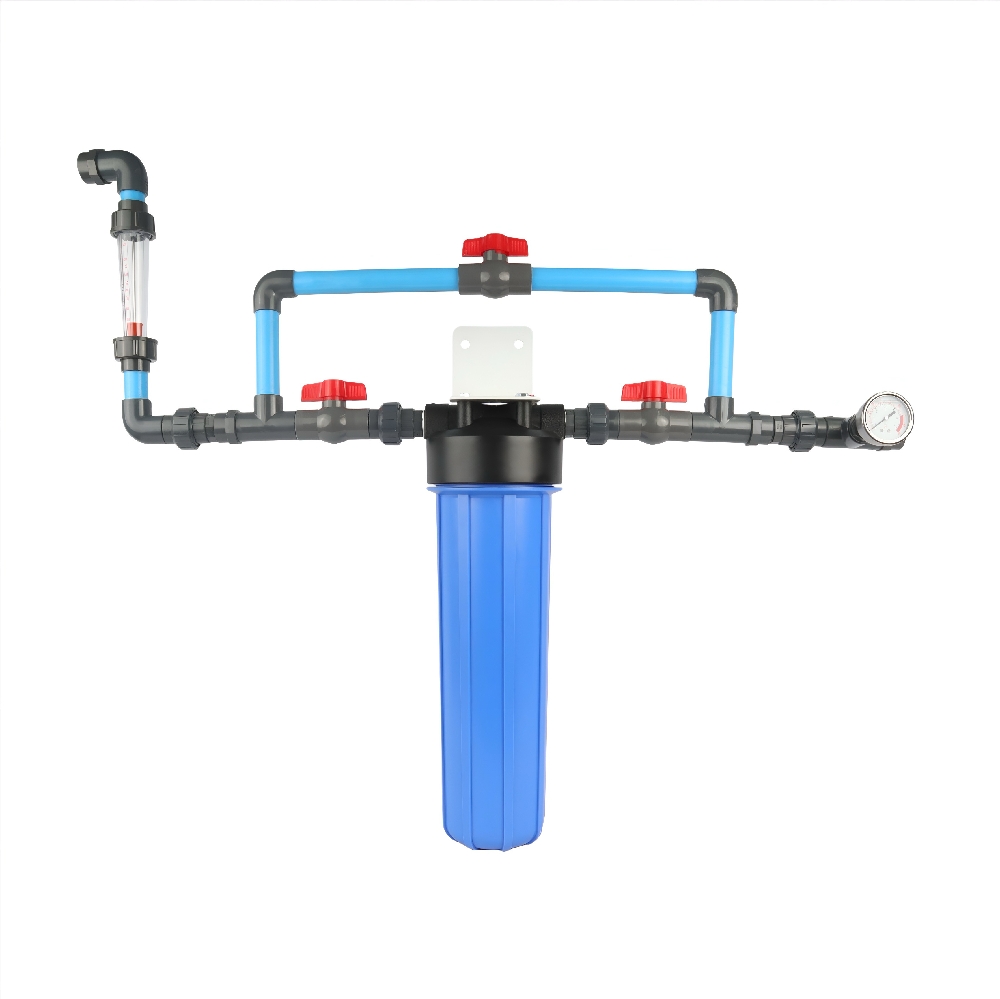
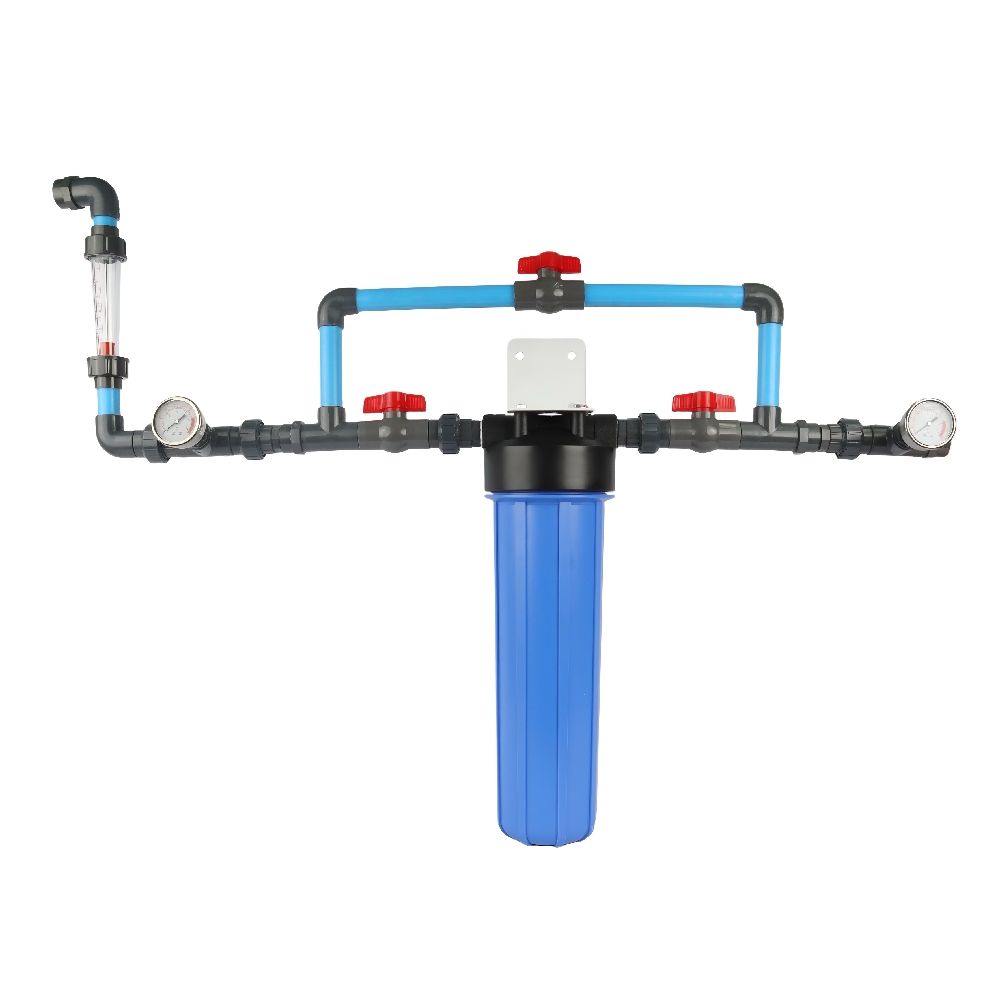
By-Pass Piping
Adding a bypass to the system allows you to divert the flow of water around the system if you need to conduct maintenance on the system.
Inlet and Outlet Pressure Gauges
Inlet Pressure Gauge allows you to monitor the pressure of the incoming source water Pressure. This will give you an indication that your water pressure is above the 6 bar maximum rating for the housings, in which case you can then install a pressure regulating valve before the filter system.
The Inlet Pressure gauge will also help to indicate whether the incoming source water pressure is too low, in which case a pressure pump can be added before the filter system.
Using an Outlet Pressure Gauge in combination with the inlet pressure gauge will give you an indication of the change in pressure (pressure “drop”) from before to after the filter system.
This will also allow you to see if and when the filters are starting to block up, indicated by a big change between the inlet and outlet pressure levels. Assisting you in knowing when to replace the filter cartridges inside.
Flow Meter (Rotameter) 250 to 2500LPH
The Flow Meter (Rotameter) allows you to see how much draw (flow rate) is growing through the filter system at a particular time and helps to give you an idea of how many litres per hour (LPH) you are using at a given time. For Example, flow rate (LPH) in a household when one versus two showers are running.
Fitting Combo Option 1
Includes:
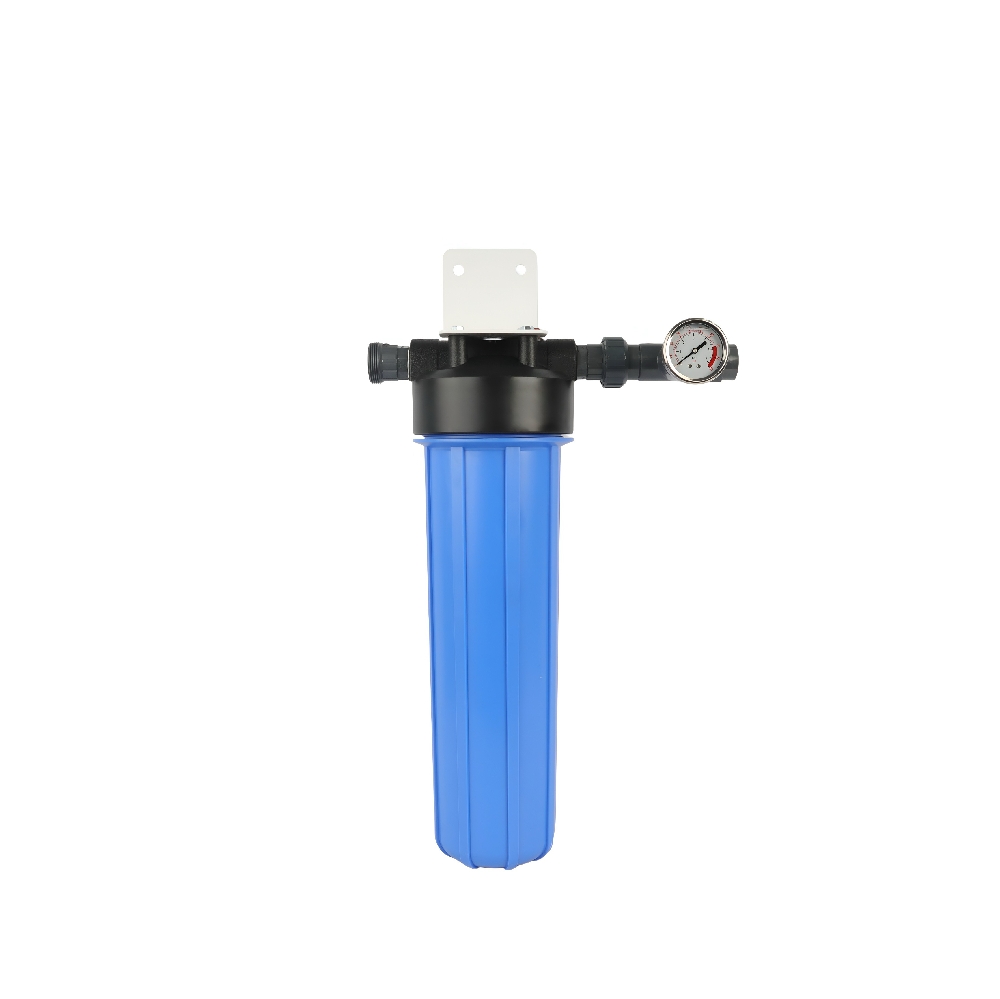
Fitting Combo Option 2
Includes:
- Inlet Pressure Gauge
- Outlet Pressure Gauge
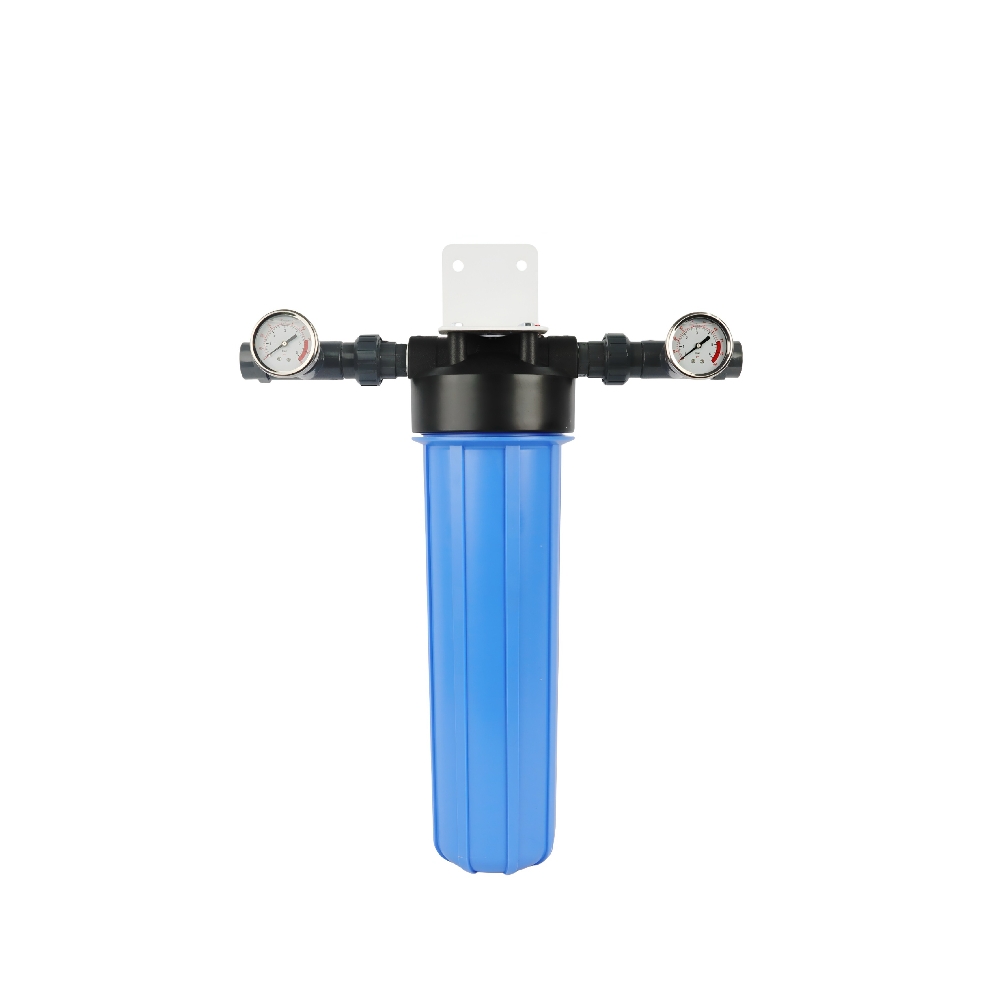
Fitting Combo Option 3
Includes:
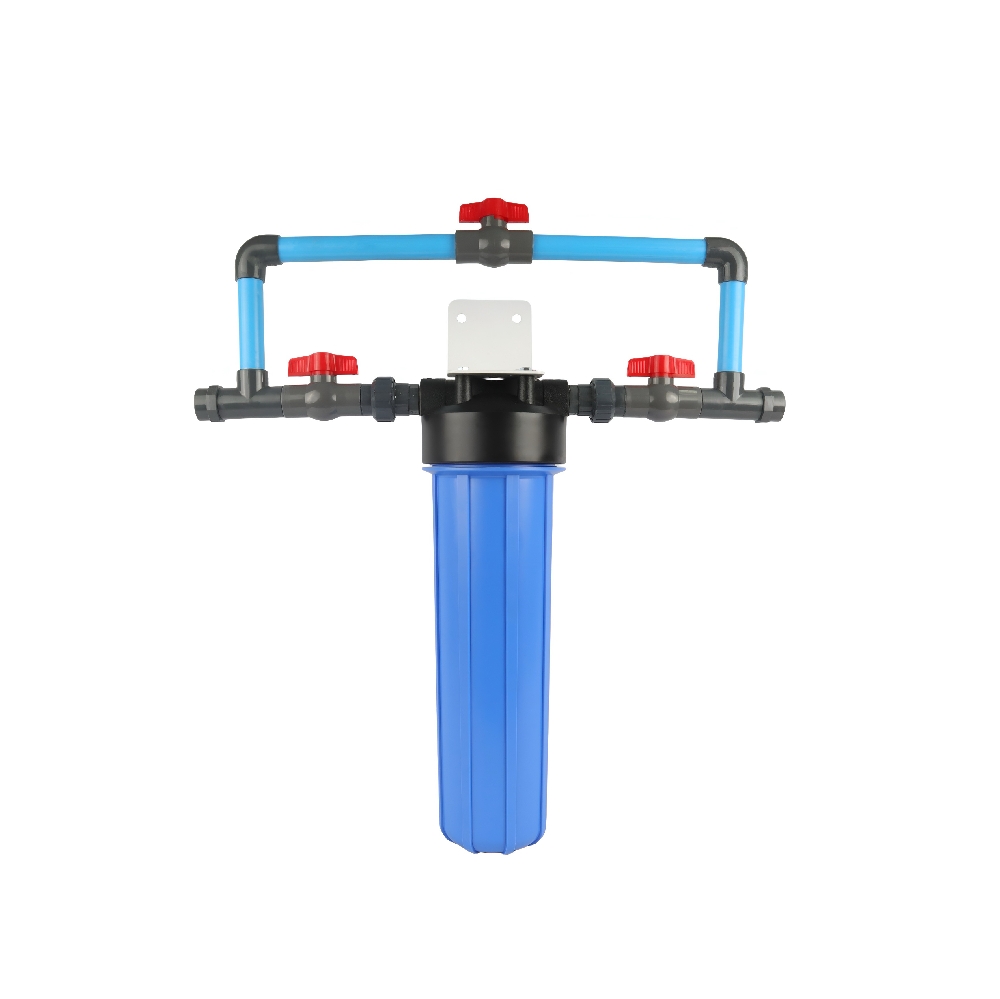
Fitting Combo Option 4
Includes:
- Inlet Pressure Gauge
- 250-2500LPH Flowmeter (Rotameter)
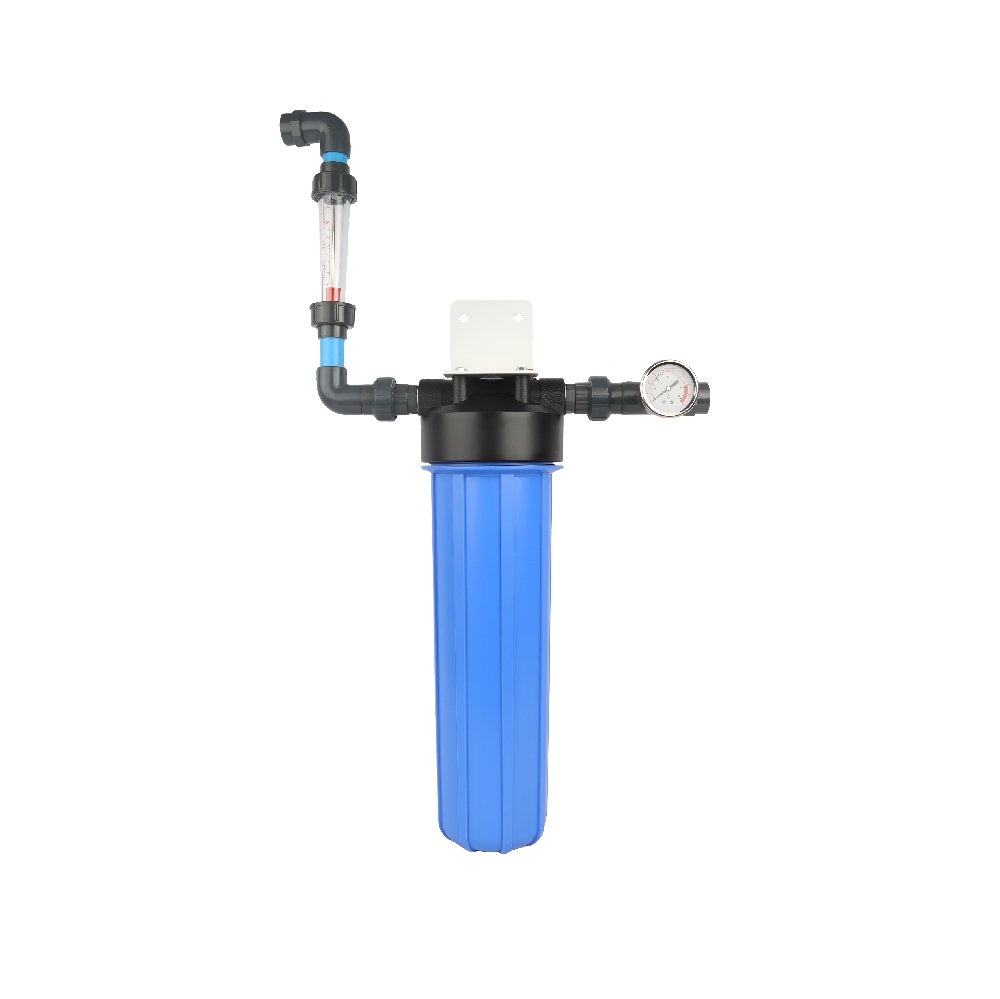
Fitting Combo Option 5
Includes:
- Inlet Pressure Gauge
- Outlet Pressure Gauge
- 250-2500LPH Flowmeter (Rotameter)
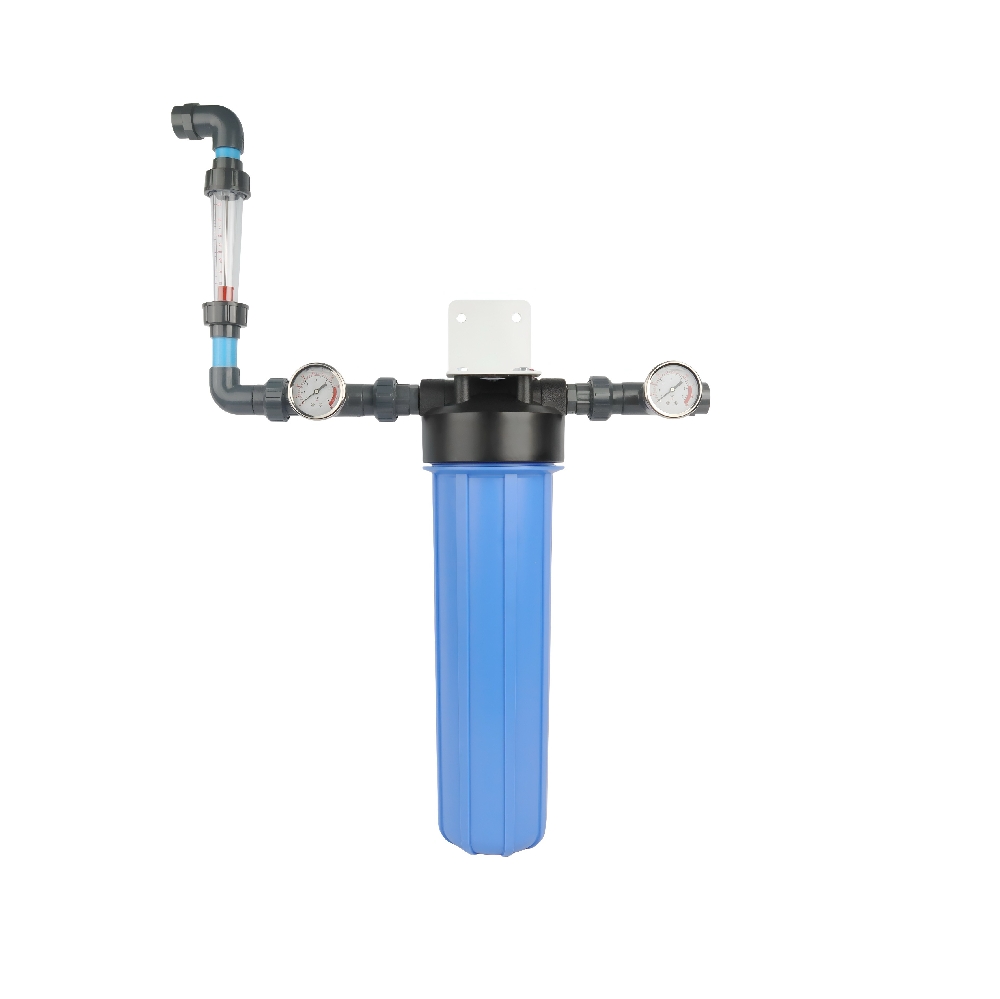
Fitting Combo Option 6
Includes:
- Inlet Pressure Gauge
- By-pass Piping
Fitting Combo Option 7
Includes:
- Inlet Pressure Gauge
- Outlet Pressure Gauge
- By-pass Piping
Fitting Combo Option 8
Includes:
- Inlet Pressure Gauge
- 250-2500LPH Flowmeter (Rotameter)
- By-pass Piping
Fitting Combo Option 9
Includes:
- Inlet Pressure Gauge
- Outlet Pressure Gauge
- 250-2500LPH Flowmeter (Rotameter)
- By-pass Piping
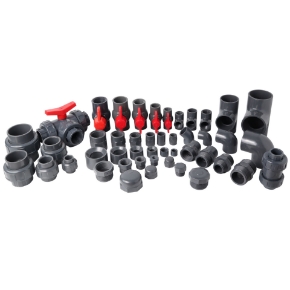
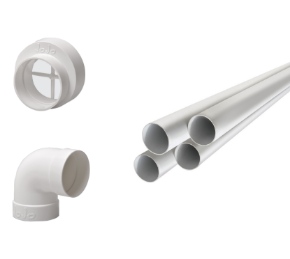
PVC Threaded and Glue Fittings
PVC(Polyvinyl chloride) fittings are used to connect sections of pipes or tubes, adapt to different sizes or shapes, and control the flow of water. There are two predominant types of PVC fittings namely PVC Glue Fittings and PVC Threaded Fittings. The difference between the two is that PVC Glue Fittings result in permanent joints and PVC Threaded Fittings are semi-permanent and can be replaced. PVC Glue fittings are joined with primer and cement- a chemical solvent that melts the surface of the PVC and then quickly re-hardens to fuse the pieces together. This results in an airtight, leak-proof bond similar to what you get with welding metal. An example of such a fitting is a PVC Glue Reducing Socket which is used to join together two pieces of PVC pipes with different diameters. Another example would be a 90 Degree Elbow which is used to connect two pipes of the same diameter at an angle of 90 degrees.PVC Threaded fittings utilize a simple threaded connection whereby replaceable 'male threaded' are screwed into 'female threaded'.Male threads have a thread on the outside of the fitting and female threads have a thread on the inside. When you thread the fitting in, it compresses against the other threads.PTFE tape is used to thread these together and the proper way to assemble threaded fittings is to finger tighten, then add one to two turns but no more. An example of a threaded fitting is a Reducing Nipple Male Threaded which is used to connect between two female threads of different diameters.
Link To PVC Fittings