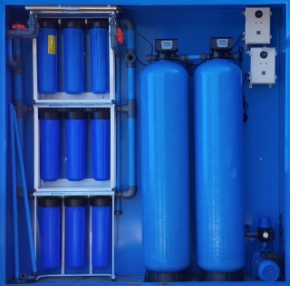
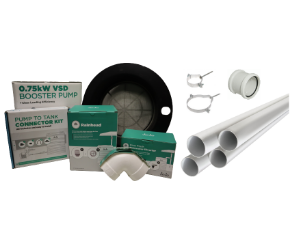
Locally Built 400LPH Industrial Reverse Osmosis System
The Reverse Osmosis (RO) system is one of the most effective filtration processes available, and has the ability to eliminate up to 99.8% of harmful contaminants in water, such as bacteria, viruses, lead, radium, chlorine, and arsenic. It makes use of multi-stage filtration technology.
With the RO system, you can rest assured that your drinking water is clean, clear, and healthy.
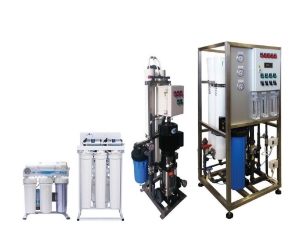
The 400 Litre Industrial Reverse Osmosis System is designed for low TDS feed water with a TDS level of <1500ppm.
These plants are manufactured and assembled in South Africa, using premium-quality imported components and parts. The RO plants are manufactured to order, and the construction lead time is typically 1 to 2 weeks**, depending on the availability of components.
About RO Plant Production Rates:
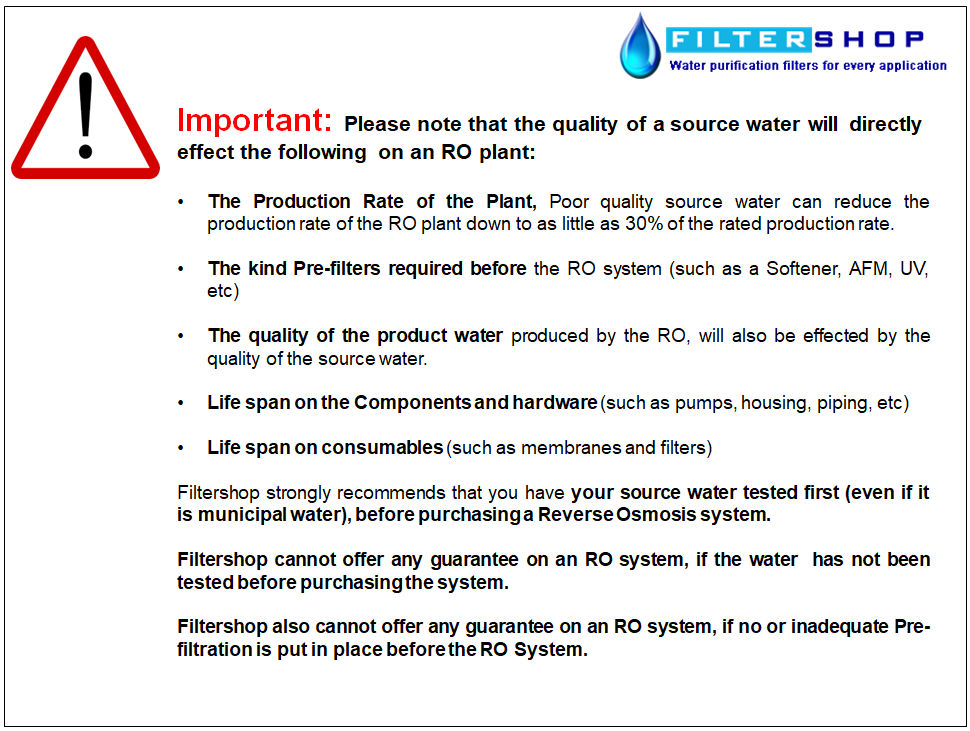
Typically, in the water filtration industry, Dual 4040 membrane size industrial RO Plants are rated for a production rate of 500 Litres Per Hour; however, this is only the theoretical maximum production rate for two 4040 RO Membranes running parallel, and is based on "ideal" source water quality, flow, and pressure rating. However, here at Filtershop, we do not agree with these manufacturer-based ratings, as in real-world applications, 9 out of 10 times you will not get the rated "maximum" potential production rate of the 4040 membranes.
We find that in most actual situations, your production rate from an RO plant will likely be between 30 to 80% of the maximum rated capacity. For example, on a good municipal source water, we find the production rate will be around 360 to 400 Litres per Hour, and not the maximum rated 500 Litre Per Hours.
About incoming water pressure:
Please note that while the Industrial RO system has a pressure pump for the RO membranes, you will still require an incoming water pressure of a minimum of 2 bar to feed the RO plant (with a maximum of 6 bar). Otherwise, the safety pressure switch on the unit will trigger, and the plant will not start.
Applications:
- Drinking water
- Food & Beverage
- Electroplating
- Boiler Feed Water
- Domestic use
- Petrochemical industry
- Process Water
- Wastewater reuse
- Agriculture
- Pretreatment of EDI or Mixed Bed
Benefits:
- Fully Equipped & Customizable
- Individually tested and preserved
- Expandable & Skid Mounted
- Low Operation & Maintenance Costs
- Components Easily Accessible
- Easy Maintenance & Servicing
- Pre-Plumbed Wired & Assembled
Things to Keep In Mind about RO Systems
RO Plant flow ratings
- The production rating of all the RO plants is based on an ideal quality source water, so in situations with low to poor-quality source water, the actual flow rate produced by an RO plant can be as low as 30 to 70 % of the rated maximum capacity. So, in other words, a 100 Litre Per Hour plant typically will produce between 30 to 80 liters per hour in real-world applications.
- Please also note that during flushing procedures, the RO plant will require 3 times the rated output of the RO from the source. (For example, a 100 liter per RO plant will require a minimum flow rate of 300 Litres per hour from the source).
- Keep in mind that none of the RO plants are designed to be or should be run 24 hours a day, as this will lead to damage to both the components and membranes.
- The RO plants require a minimum of 2 – 3 bar pressure from the source water. If you are using gravity feed, then you should consider putting a pressure pump into the feed of the RO system.
Waste Water
- As the RO process filters water to such a fine level, the membranes need to flush themselves as they run to remove the contaminants and minerals caught on them. This flushing results in wastewater, which will go straight down the drain.
- On the smaller size industrial RO plants, the wastewater to product water ratio is typically between 1:1 and 2:1. So for every 1 Litre produced by the reverse Osmosis plant, between 1 to 2 liters will be used to flush the membranes and goes down the drain.
- With the large-scale RO plants, the wastewater to product water is typically between 1:2 and 1:1. So for every 1 liter of product water produced by the plant, between .5 to 1 liter of water is used to flush the membranes and goes down the drain.
- Please keep in mind that the exact wastewater to product water ratio will depend on several factors such as the quality of the source water and what quality of product water you are trying to produce. Normally the lower the TDS you are trying to produce from the RO plant, the high the wastewater ratio will be.
- The RO Plant requires a minimum of 2 bar incoming water pressure.
Product water quality
Typically, with most municipal supplies, the Industrial RO plants should produce product water with a TDS of less 10. However, please note that this will depend on the quality and TDS of the source water. Higher source water TDS will lead to a much higher TDS level in the final product water.
Warranty**:
The Industrial RO System comes with a 1-year* Warranty.
Please note that the warranty does not cover the filter cartridges or RO Membranes, as their lifespan is completely dependent on the quality of the source water, as well as the flow rate through the system.
*Please note that the warranty does not cover damage caused by mishandling, improper installation, or in situations where the max operating parameters for the product are exceeded.
**Please note that failing to put adequate Pre-filtration before the RO system will also void any warranty on the System.
Reverse Osmosis Membrane Options:
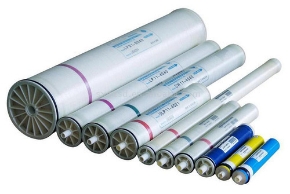
There are several Options available for the Reverse Osmosis (RO) Membrane used in the RO plant:
Pre-Filteration Options
First Pre-Filteration Options: Coarse Sediment Pre-filteration Options
There are several pre-filters available for industrial reverse osmosis (RO) Systems. Please see below some information on the different options and what each of the filters removes from the water.
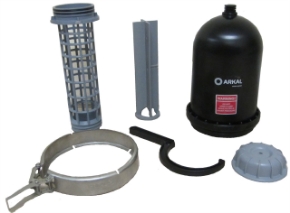
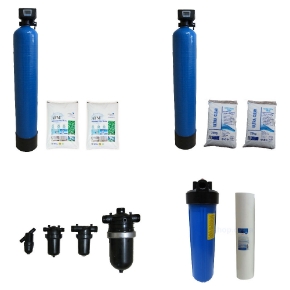
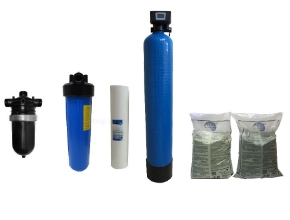
Coarse Sediment Pre-filtration Option 1: 2" (50mm) Arkal Disc Filter (20 Micron)
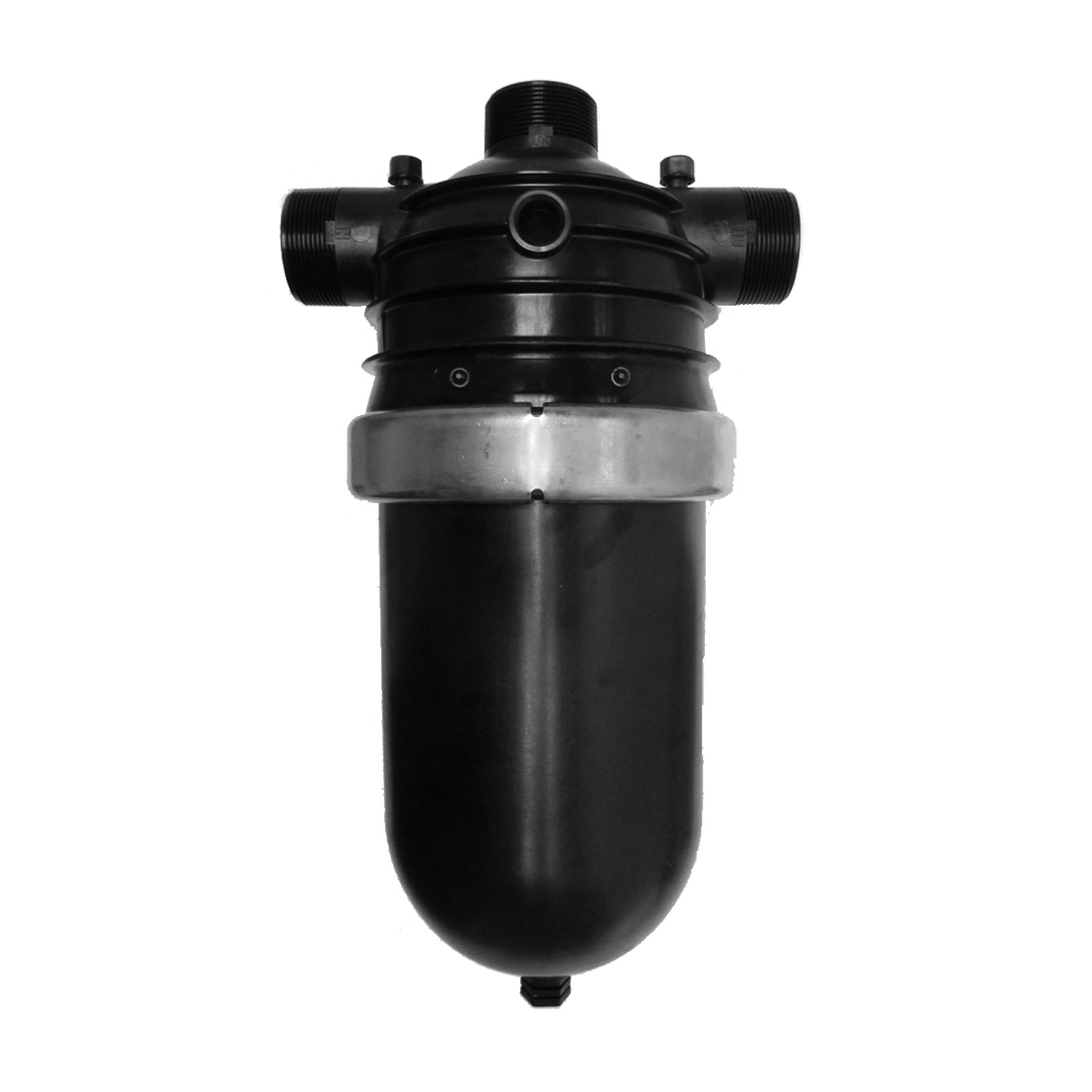
The disc filter will remove any large sediment, dirt, rust, sand and other large visible particles in the water.
The Disc filter will help to remove the larger and coarser sediment, helping to extend the life span of the finer particle filters and RO membrane.
The disc filter can handle a high flow rate.
The disc filter’s cartridge is reusable, and once it becomes filled you simply open the housing, remove the cartridge, wash it under a tap and then replace it in the housing.
Please find more information on the Arkal Disc Filters at the following link, https://filtershop.co.za/en/disc-filters
Coarse Sediment Pre-filtration Option 2: Atlas Filtri Hydra Big - Backwashable Sediment Filtration System (50 Micron)
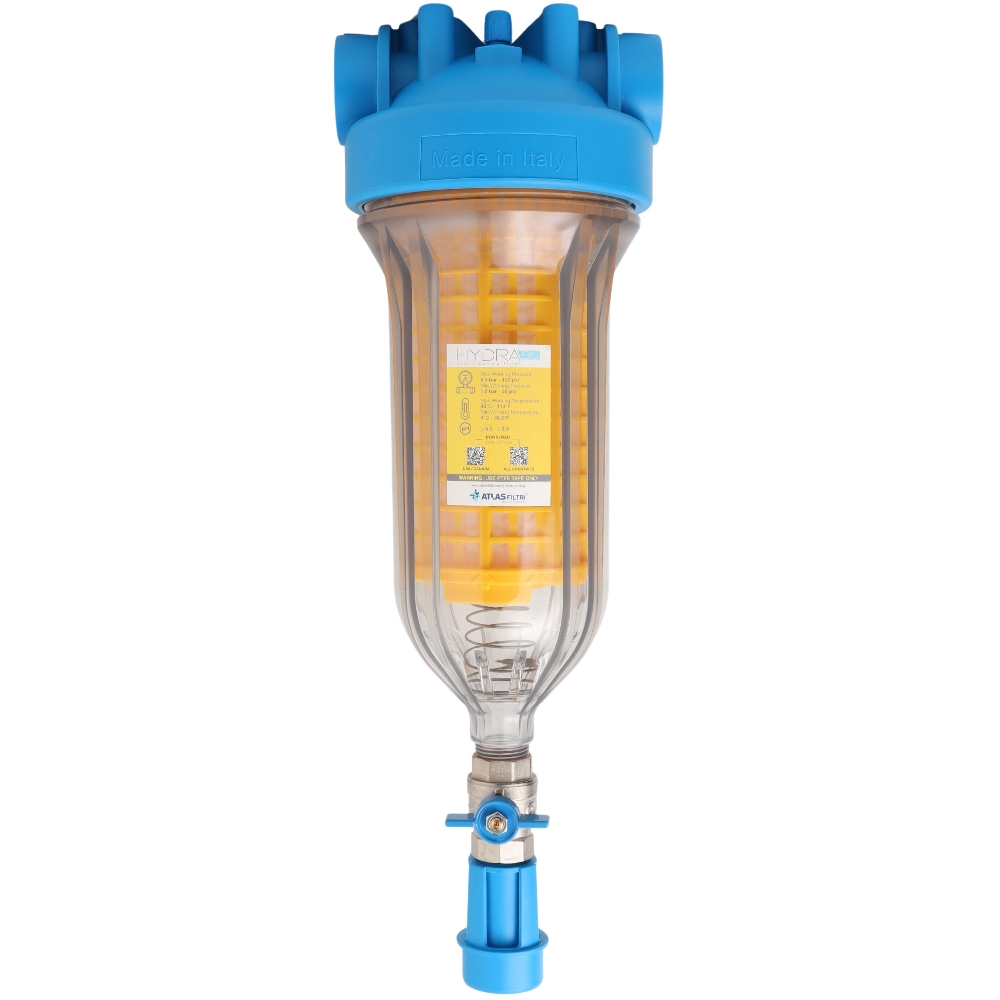
The Hydra Big self-cleaning filter, crafted by Atlas Filtri, epitomizes innovation and reliability in water filtration technology. Designed to meet the diverse needs of modern households, this cutting-edge filter offers unparalleled performance, convenience, and peace of mind.
Advanced Filtration Technology: At the heart of the Hydra Big filter lies a sophisticated self-cleaning mechanism, revolutionizing the way water is purified. Equipped with precision-engineered components, including high-quality mesh screens and advanced filtration media, this filter effortlessly eliminates impurities, sediments, and contaminants from your water supply. Whether it's rust particles, sand, or debris, the Hydra Big ensures crystal-clear water that's safe for consumption and household use.

Coarse Sediment Pre-filtration Option 3: Ultra Clear Glass Filter System ( +/- 5 to 10 Micron)
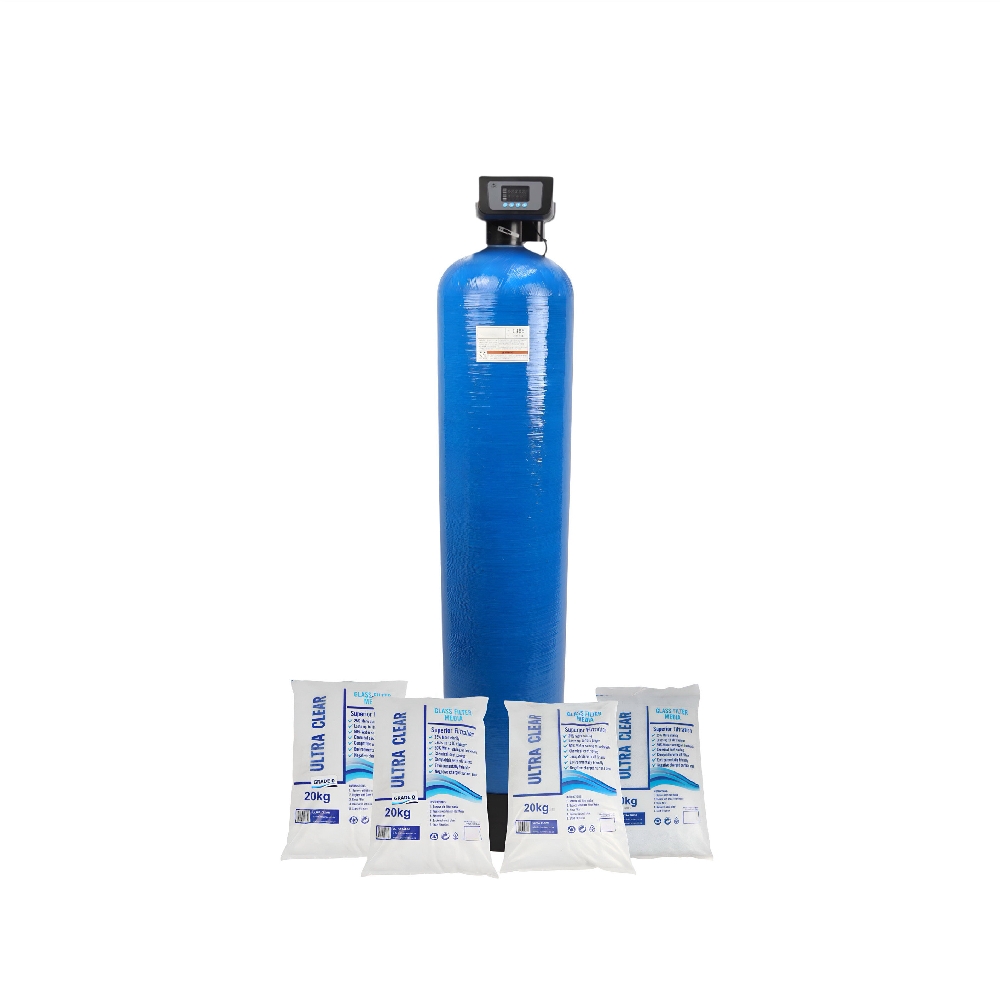
The Ultra Clear Glass media is a High-Tech filtration media, used for the removal of sediment, dirt, rust, and other large particles in water. The Ultra Clear Glass Filtration Media is produced from virgin plate-glass.
The Ultra Clear Glass Media can filter down to as fine as +/- 5 Micron, provided the finer grade media is used.
The Ultra Clear Glass Filtration media replaces traditional Silica Sand Media. Filtering to a much finer level, as well as having a much longer life span than typical silica sand media.
Coarse Sediment Pre-filtration Option 4: 100 Litre AFM Glass Media Vessel (+/- 3 to 5 Micron)
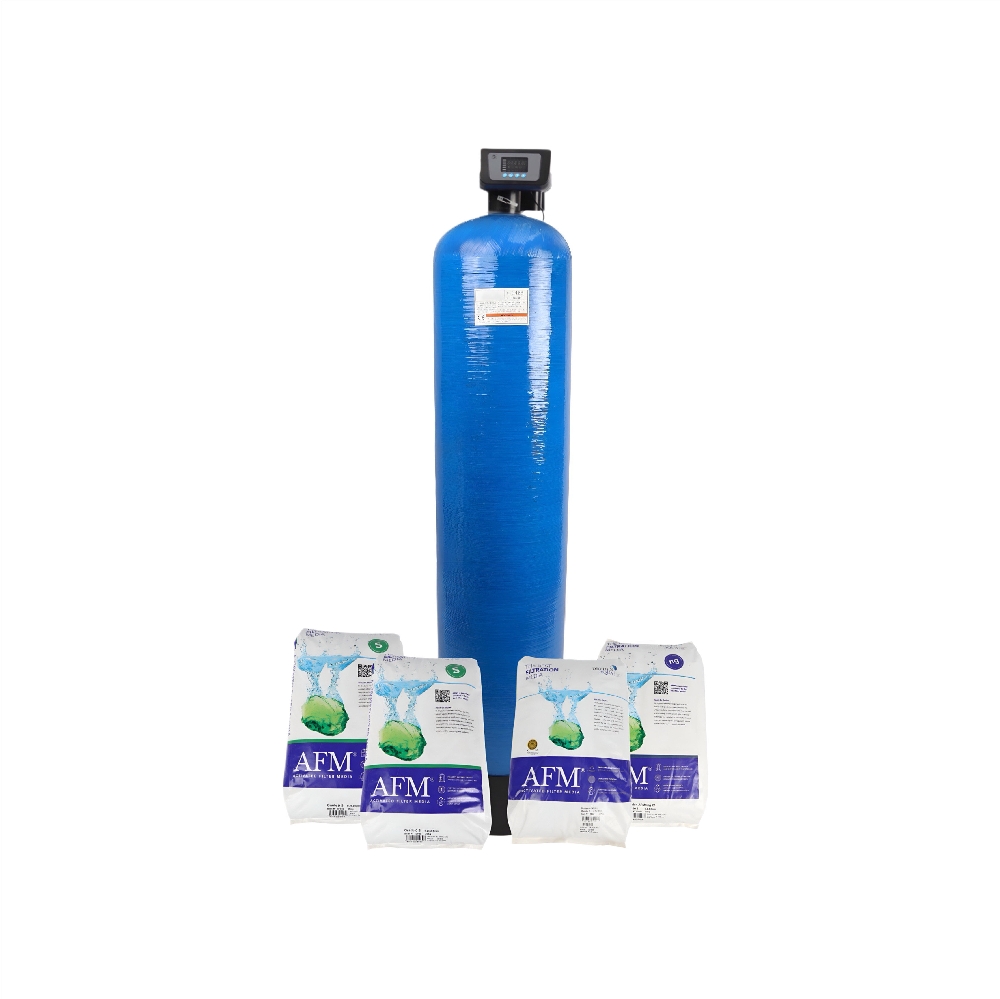
AFM® (Glass) Media is also a glass-based filtration media used to remove sediment, dirt, and sand, much like the crystal sand media. However, unlike crystal sand, the AFM® filters down to between 3 & 5 microns, and so removes much finer sediment than the crystal sand. Also unlike the crystal sand media, the AFM® is activated which means it will also remove some chlorine as well as some iron from the source water.
AFM® Activated Filter Media is a direct replacement for sand, doubling the performance of sand filters without the need for additional investments in infrastructure. AFM® resists biofouling, bio coagulation and transient wormhole channeling of unfiltered water and never needs to be recharged or replaced.
AFM® is a highly engineered product manufactured from a specific glass type, processed to obtain the optimum particle size and shape. It is then exposed to a 3-step activation process to increase its surface area by up to 300 times for superior mechanical and electro-static filtration performance.
Please find more information on the AFM® Filter Media at the following link, https://filtershop.co.za/en/afm-glass-media-filter-vessels.
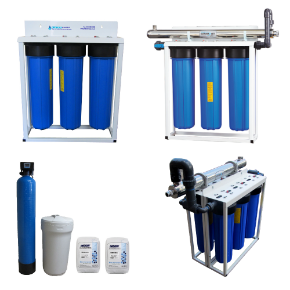
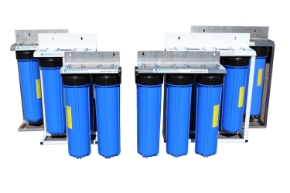
Pre-Filtration Option: Triple Big Blue System
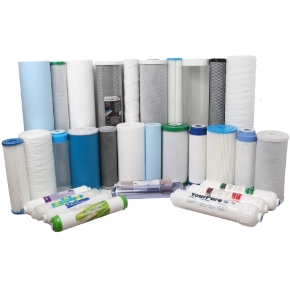
The triple big blue system uses industry-standard 20" (inch) Big Filter Cartridges, making the replacement filters easy to source and change.
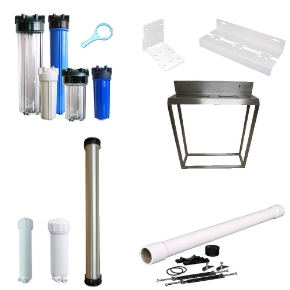
Bracket and Housing Options for the Big Blue Systems
The Triple Big Blue Systems are available in several Bracket options:
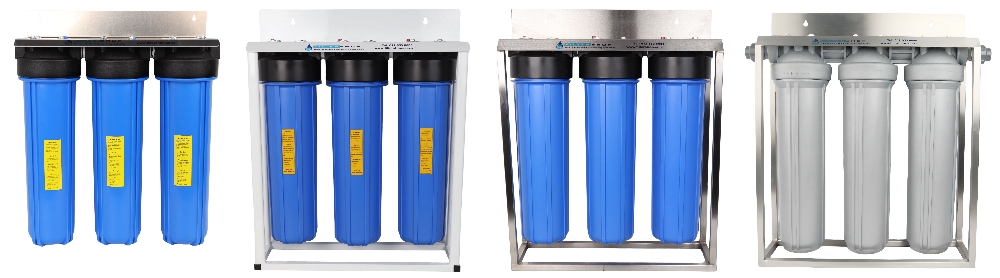
Filter Set Options for the Big Blue Systems
The triple Big Blue System is available with several different combinations of Filter Cartridges, all of which will perform different functions and purposes. Please see below for more information on the different combinations available.
Filter Set Option 1: 5 Micron, Activated Carbon Block, & 1 Micron
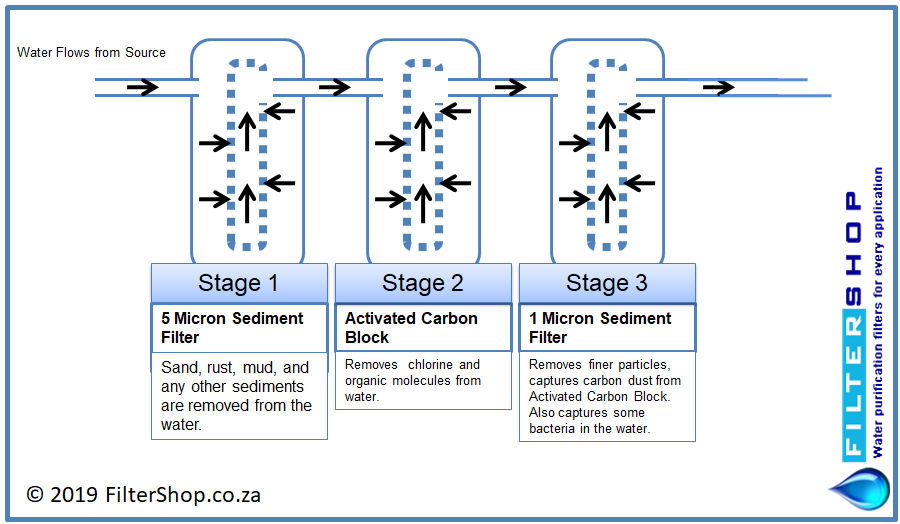
- For good quality municipal water only, there is no protection against bacteria.
Filter Set Option 2: 5 Micron, Silver Nano Activated Carbon Block, & 1 Micron
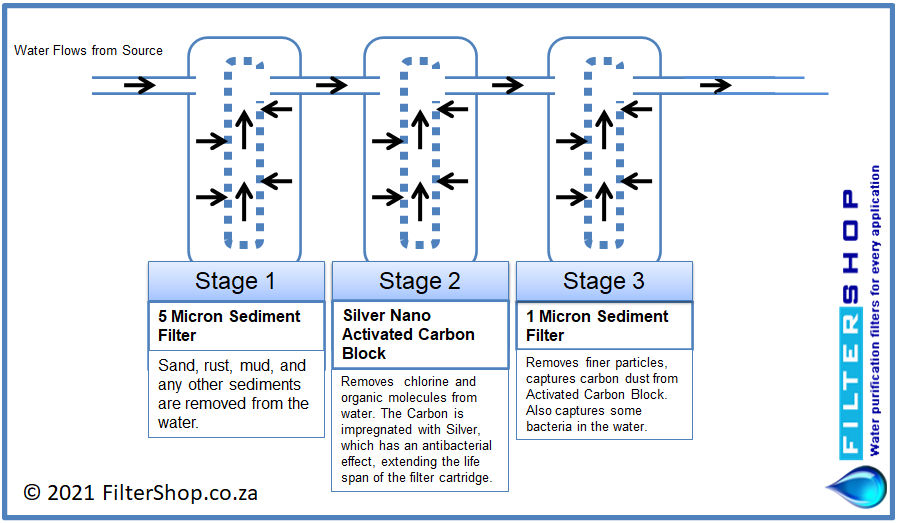
- For Decent quality municipal water only, there is no barrier against bacteria, but resistance to growth in the filter.
Filter Set Option 3: 5 Micron, Premium KDF Cartridge, & 1 Micron
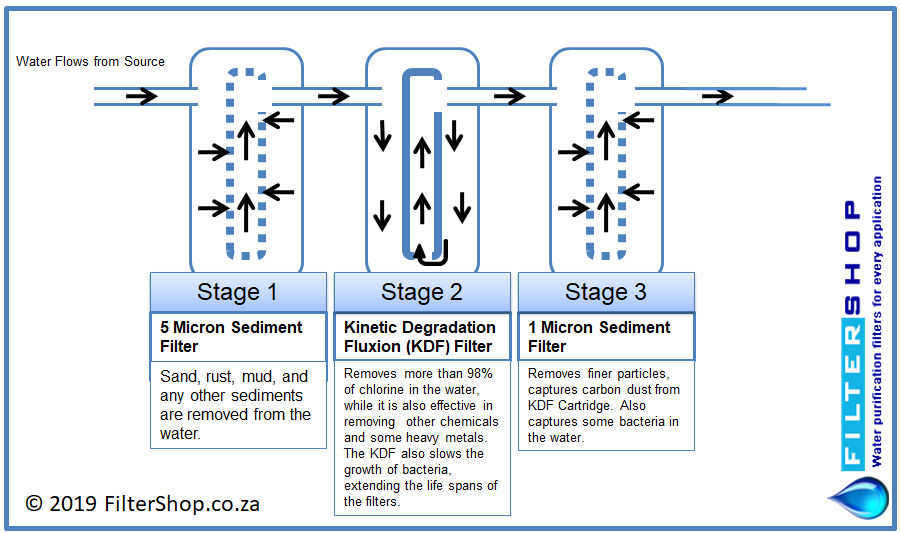
- For Decent quality municipal water only, there is no barrier against bacteria, but resistance to growth in the filters, and some Heavy Metal Reduction.
Filter Set Option 4: 1 Micron, Activated Carbon Block, & 0.1 Micron
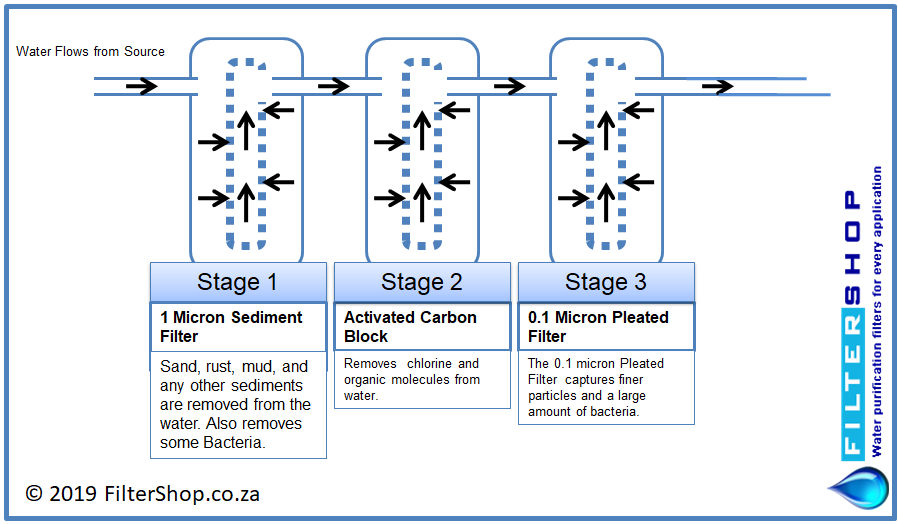
Filter Set Option 5: 1 Micron, Silver Nano Activated Carbon Block, & 0.1 Micron
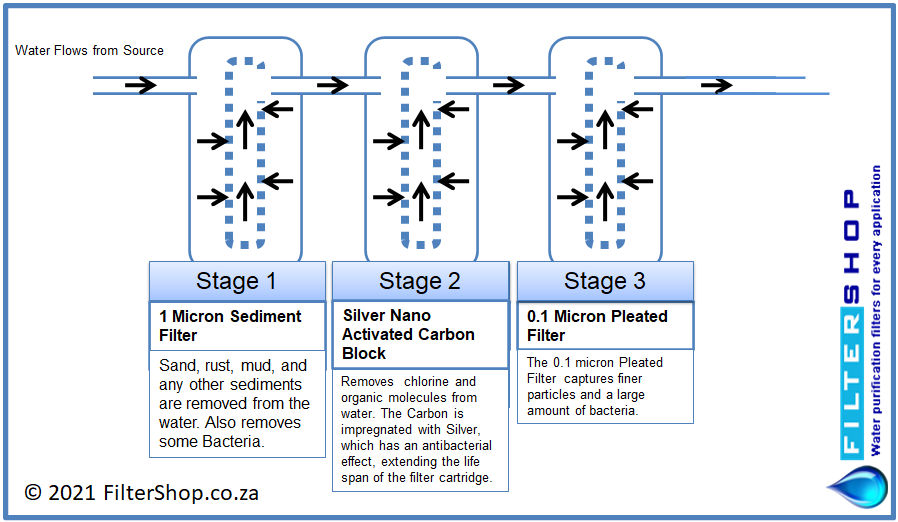
- For municipal, Rain, or Borehole water, there is a Barrier protection against bacteria Plus resistance to Growth in the filters. So can be used for Backup, Limited bacteria in municipal water, Borehole (typically not the only thing needed), and very occasional Rain Water filtration. No Corrosion Protection for Rain Water, Siliphos or SSG will need to be added as a 4th stage for frequent rain water use.
Filter Set Option 6: 1 Micron, Premium KDF Cartridge, & 0.1 Micron
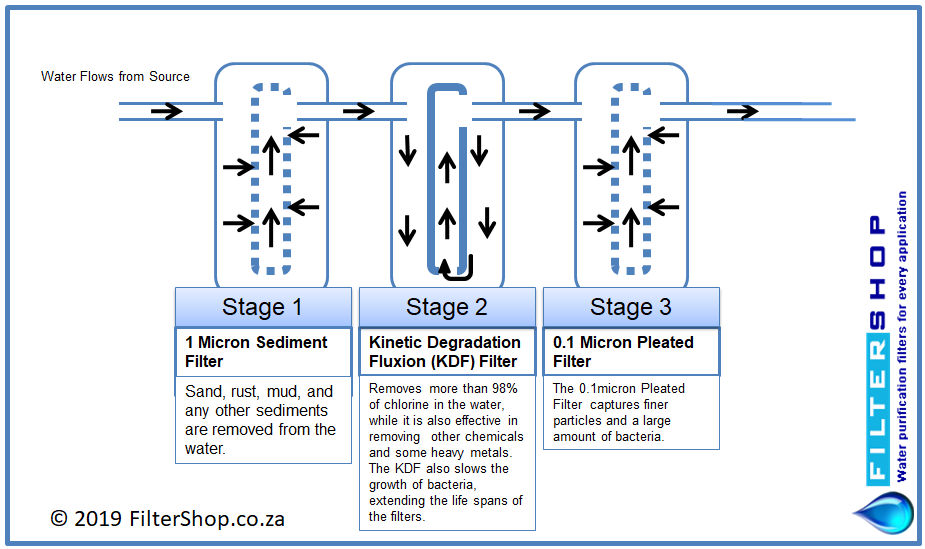
- For municipal, Rain, or Borehole water, there is a Barrier protection against bacteria Plus resistance to Growth in the filters. So can be used for Backup, Limited bacteria in municipal water, Borehole (typically not the only thing needed), and very occasional Rain Water filtration and some Heavy Metal Reduction.. No Corrosion Protection for Rain Water, Siliphos or SSG will need to be added as a 4th stage for frequent rain water use.
Filter Set Option 7: 1 Micron, & 2 x Activated Carbon Blocks
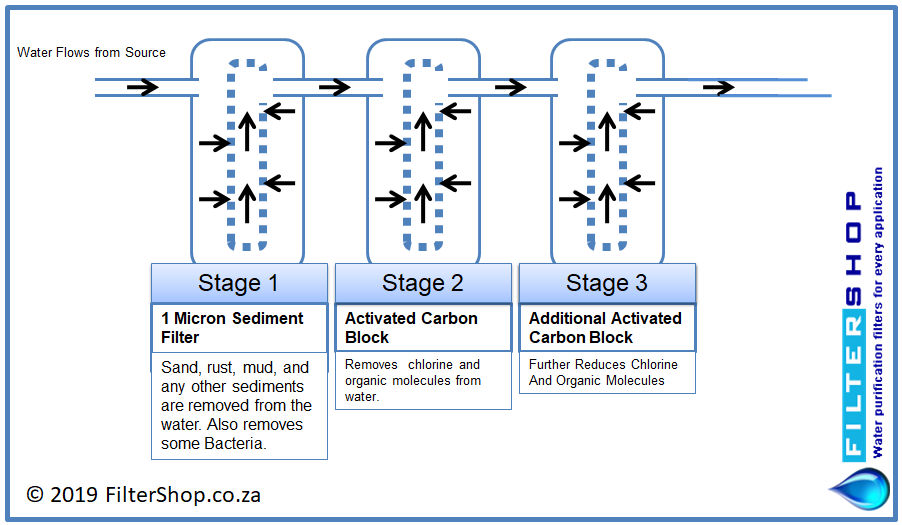
- For Municipal water with constant High Levels of Chlorine, and no bacteria.
Filter Set Option 8: 1 Micron, & 2 x Silver Nano Activated Carbon Blocks
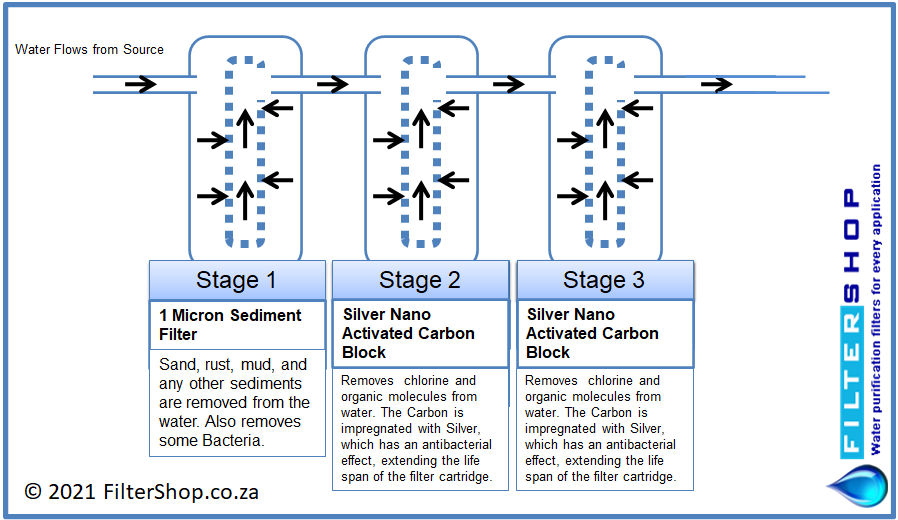
- For Municipal water with constant High Levels of Chlorine, and Limited Intermittent Bacteria.
Filter Set Option 9: 1 Micron, & 2 x Premium KDF Cartridges
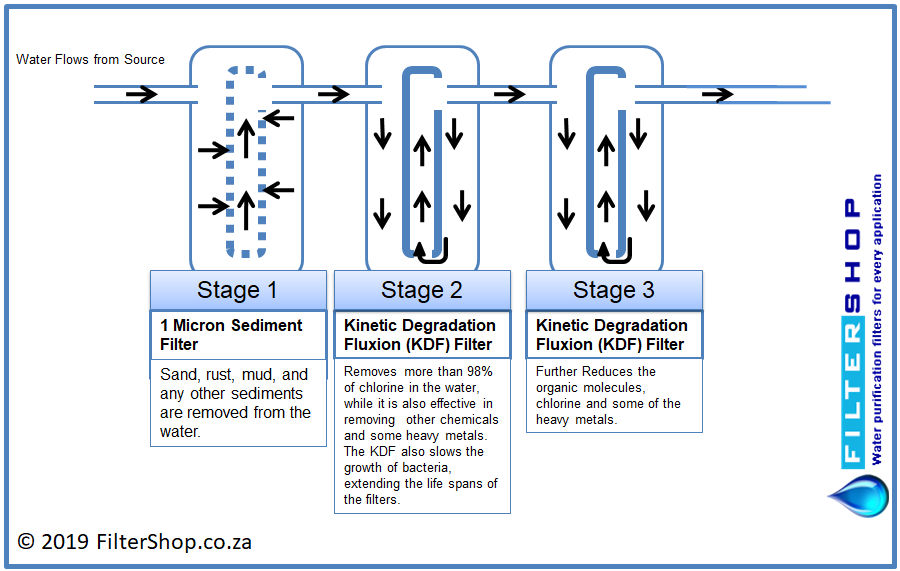
- For Municipal water with constant High Levels of Chlorine, and Limited Intermittent Bacteria, also reduces some heavy metals.
Filter Set Option 10: 5 Micron, 1 Micron, & 0.1 Micron
*Please keep in mind that this option will not remove any chlorine from water, and is not recommended for municipal source waters.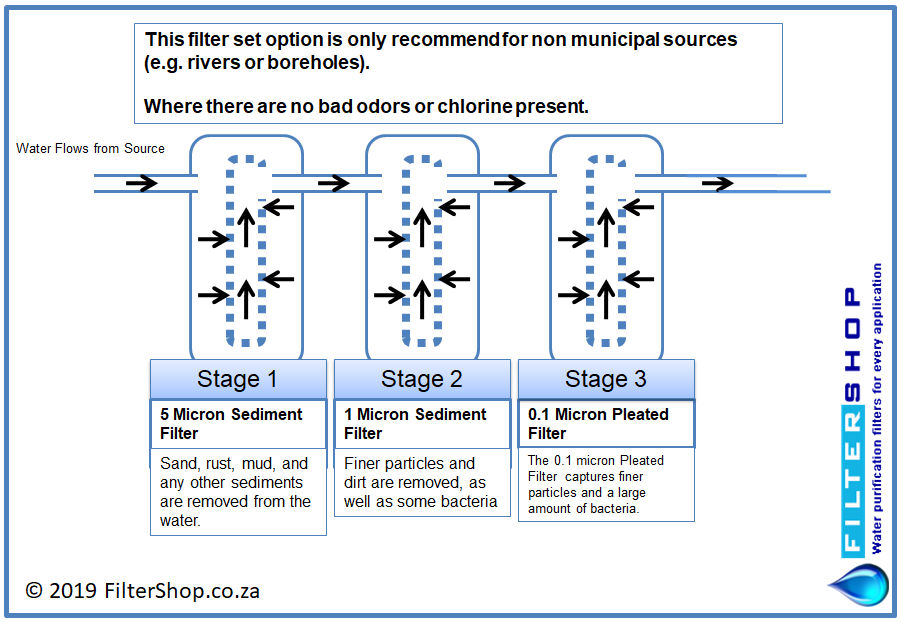
- For non-municipal water with constant Levels of Dirt Low Bacteria. A typical application would be certain Borehole waters.
Additional Filter Cartridge Options
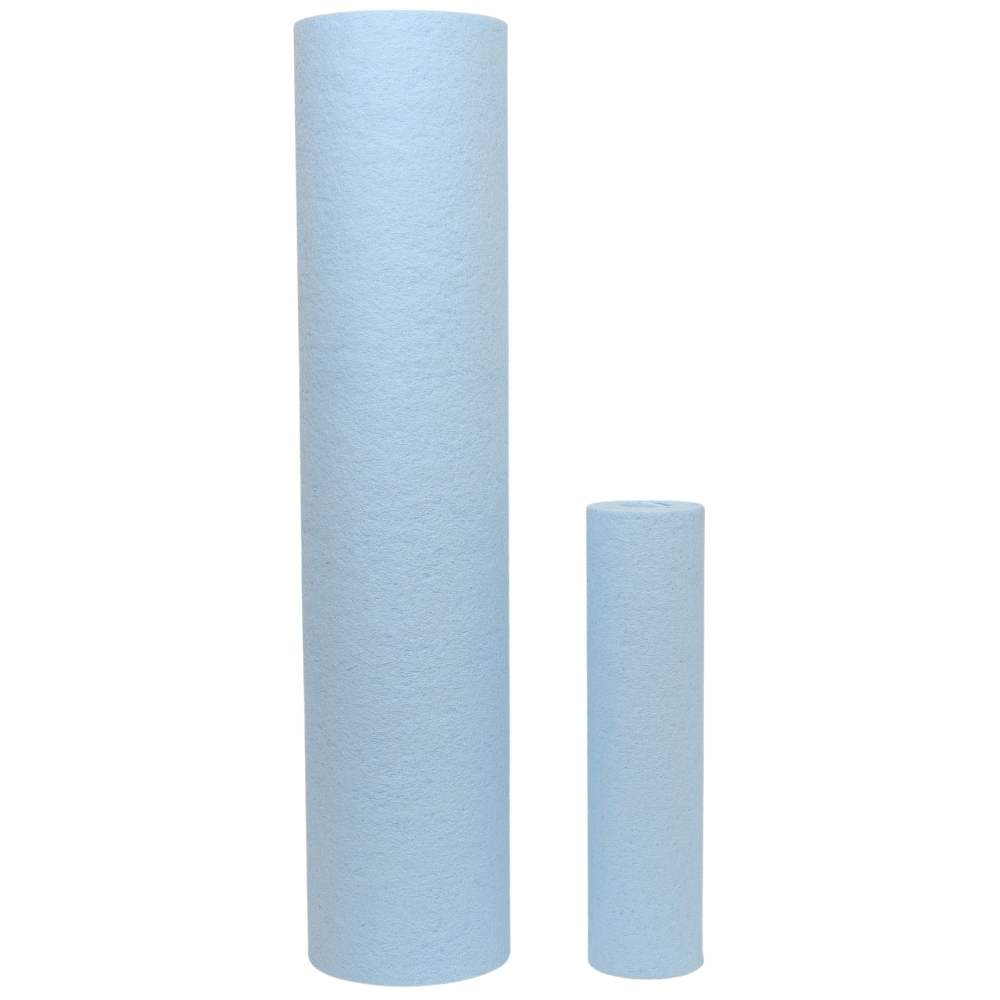
Change Standard 1 Micron Melted Spray to Antibacterial Option
The Melted Spray Antibacterial filters like the standard melted Spray type are designed to capture dirt, sediments, visible particles, and bacteria.
However, the Melted Spray sediment filters have had a silver ion additive added to their material, which creates a bacteriostatic function to inhibit the growth of bacteria on the surface of the filter, helping to ensure healthier product water and a longer life span of the filter.
This option is ideal for source waters that have a very high bacterial / organism count and will help to extend the life of the filter.
Change Nominal 0.1 Micron to Absolute 0.1 Micron Pleated Filter Option
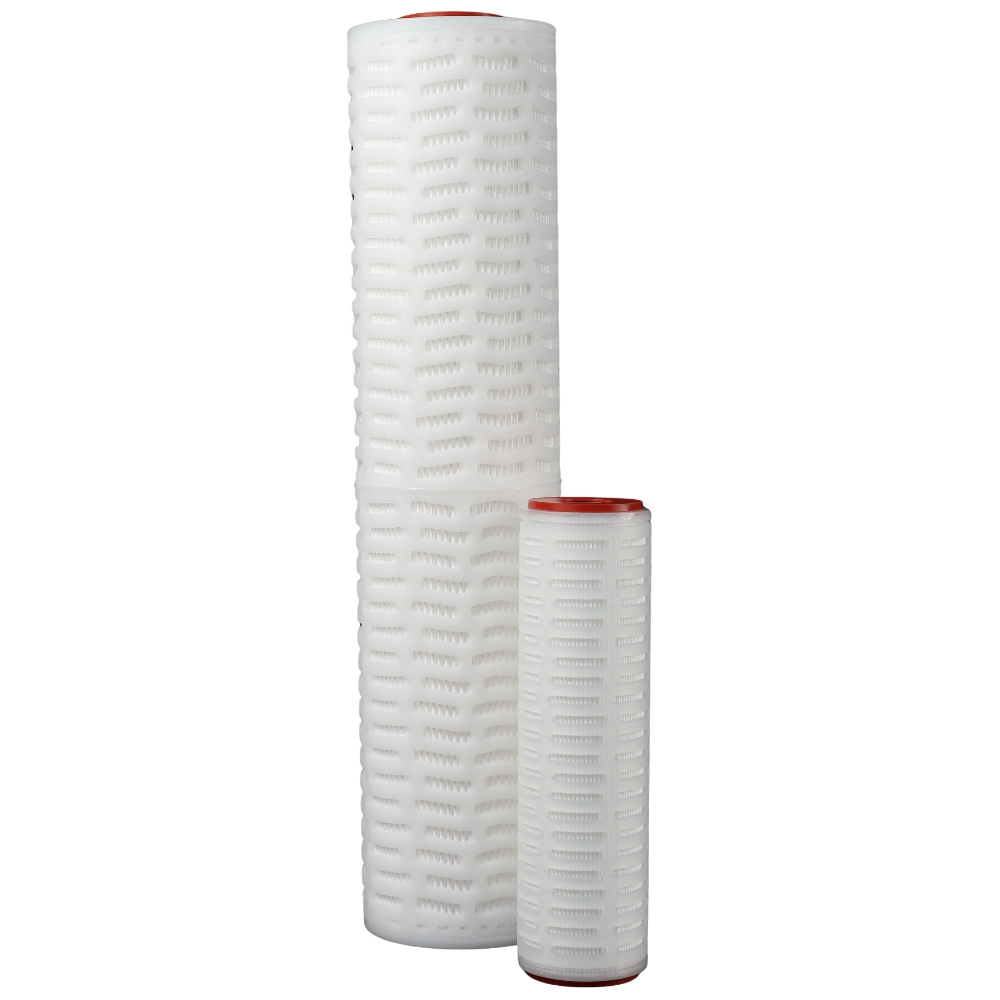
If you select a filter set with the 0.1 Micron Pleated Filter then you will have the option of either a "Nominal" or "Absolute" Pleated Filter for the 0.1 Micron.
Most sediment filter cartridges such as the standard 0.1 Micron Pleated Filter, have what is referred to as a nominal filter rating. Essentially what this means is that the micron rating of a filter is the approximate "average" size (diameter) of the pores on its surface and within the cartridge itself. It is generally accepted that filters with nominal filter ratings will retain (trap) around 85% of the particles equal or greater in size to the stated micron rating.
An "Absolute" filtration rating means that the filter material has been specifically manufactured, and passed lab testing to ensure that 99.9% of the particles larger than the stated micron rating will be captured (trapped) on the surface or within the filter itself. In the case of our 0.1 micron Absolute Filters, this means that you will get the most effective removal of bacteria and organisms possible with 20" Big type Filter Cartridges.
Pre-Filtration Option: 100 Litre Water Softener
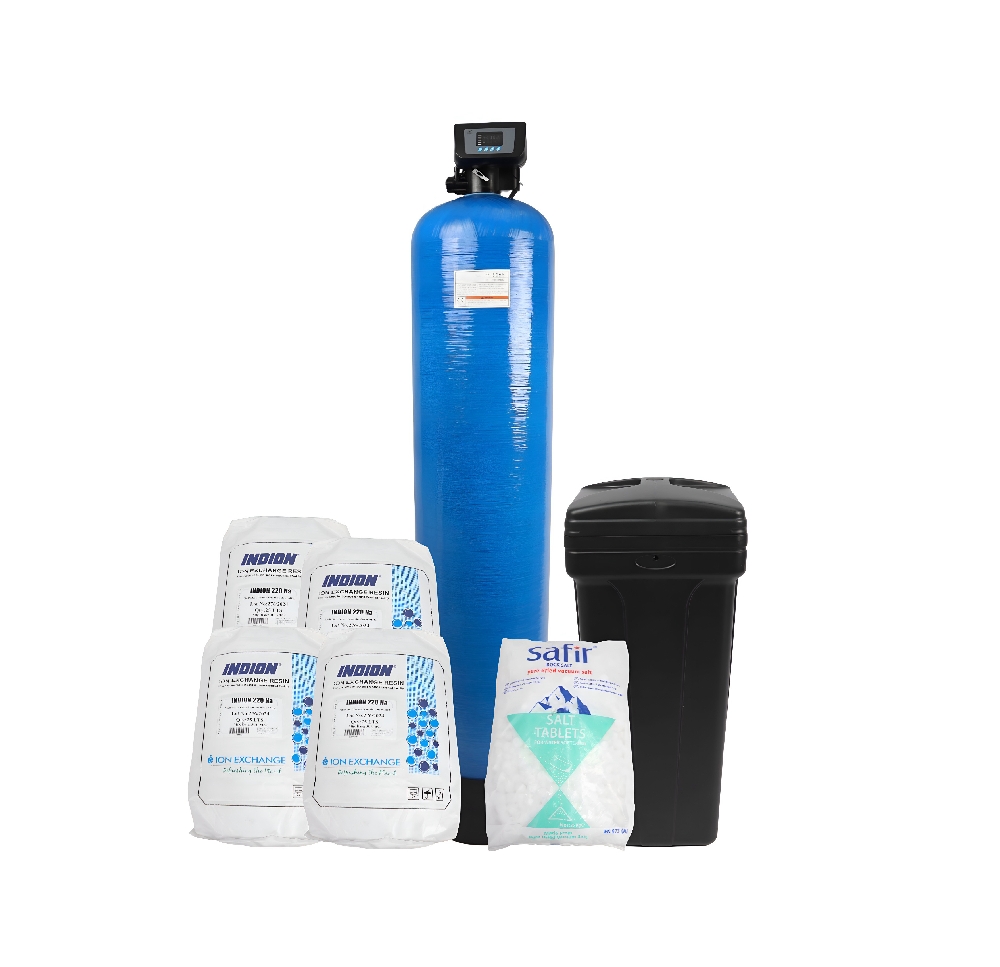
The Water softener is used to remove hardness (also known as calcium, lime, kalk) from the water. Hardness (kalk/lime) is very harsh on both the Reverse Osmosis membrane as well as the components of the RO systems itself, so by removing the hardness the water softener helps to preserve the components and extend the life span of the RO membranes.
How does the water Softener Work?
A water softener is an ion exchange system, which essentially means that it swaps one ion for another.
In the case of water softener, it exchanges the hardness ions (calcium & magnesium) for sodium ions.
The cation resin inside of the vessel is coated in sodium ions, as the water flows through the vessel the sodium ions exchange places with the hardness. So the hardness “sticks” to the cation resin inside of the vessel and the sodium ions continue on with the water.
Please find more information on the Water Softener at the following link, https://filtershop.co.za/en/water-softeners
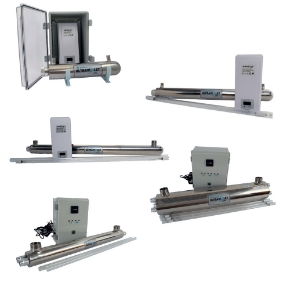
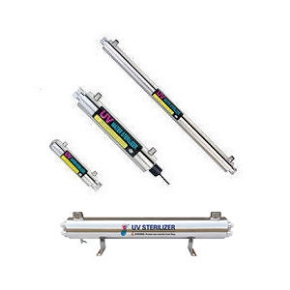
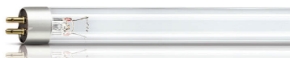
Pre-Filtration Option: Stainless Steel Germicidal Ultraviolet (UV) Light
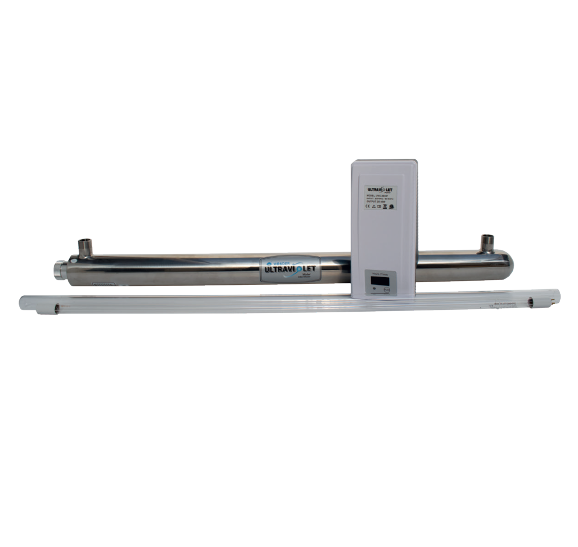
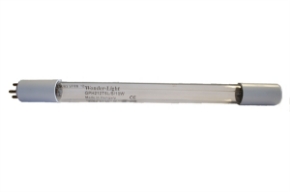
The UV lights kill bacteria and other organisms in the water, using ultraviolet (UV) rays. While the Reverse Osmosis (RO) Membrane/s will also remove bacteria, in situations with very high bacteria levels, the membrane cannot flush sufficient amounts of bacteria off of its surface. This causes "Bio-Fouling" where the high level of bacteria actually starts to "eat" through the membrane's material, reducing its life span. The UV light will help to reduce the number of bacteria that the membrane has to remove, and so help to prevent Bio-fouling from occurring.
*Keep in mind that the effectiveness of a Germicidal UV Light will be reduced if there are particles, dirt, sand, or any other kind of sediment present in the water. As a result you will require at minimum some corase sediment filteration before the UV light, to remove these particles and improve the effectiveness of the light.