Budget Series 100 Litre Water Softener System
A Water softener is used to remove, reduce, and/or control the hardness (also known as calcium, lime, kalk) in water. The Budget series 100 Litre Water Softener has a maximum flow rate of 2000LPH @ Maximum Hardness level of 200ppm.
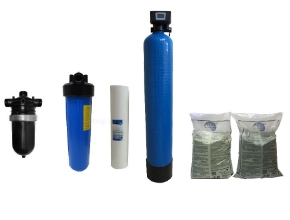
The Budget Series 100 Litre Water softeners come standard with the following:
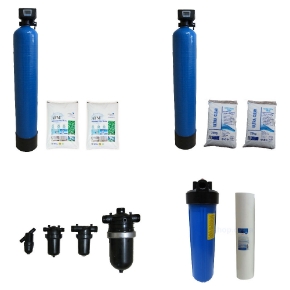
- 100 Litre (14*65) FRP Vessel
- 1 x F116Q1 Automatic Softener Valve
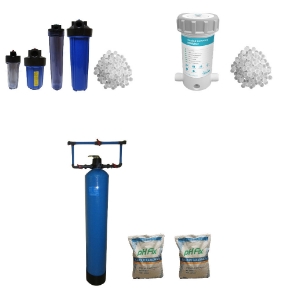
- 4 x Bags of Standard Softening Resin (25Litres)
- A Bucket of Salt Pellets / Tablets - 5kgs
- 1 x 100Litre Brine Tank with Brine Valve
- 1 x Set of Water Hardness Testing Strips
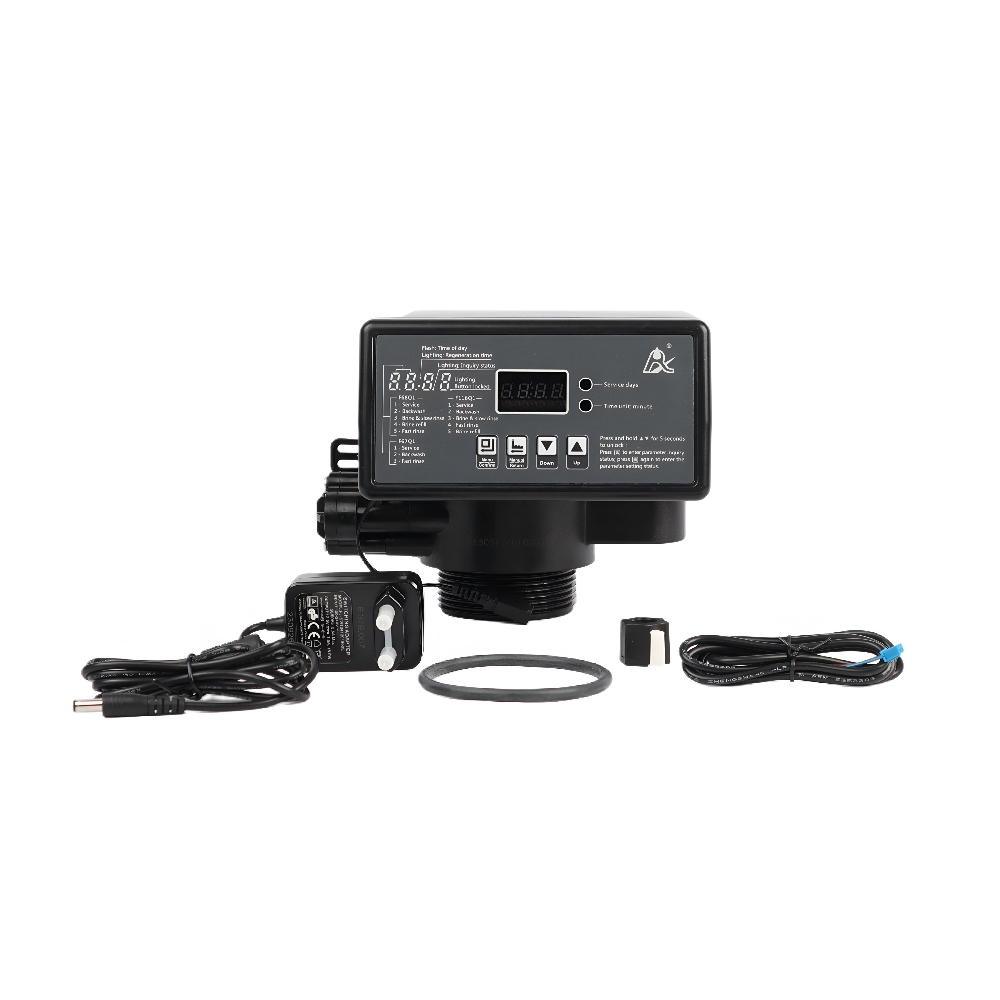
The Budget Series of water softeners uses the Runxin F116Q1 Automatic Softener Valve head. The F116Q1 valve head's settings allow you to set the regeneration cycle to be "triggered" after a set time (for example, every 5 days).
*Please note that the F116Q1 Valve head does not measure or keep track of how many litres (and/or Gallons) have gone through the softener systems.
The Budget Series Water Softeners also have three other sizes available:
- Budget Series 25 Litre Water Softener - Click Here
- Budget Series 50 Litre Water Softener - Click Here
- Budget Series 75 Litre Water Softener - Click Here
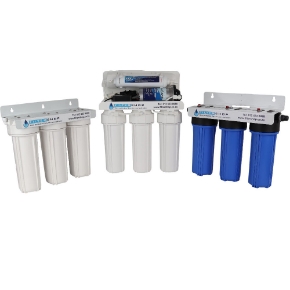
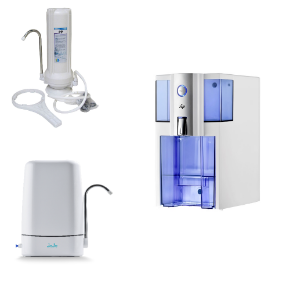
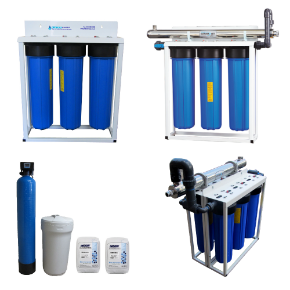
Filtershop also has several other water softener series available:
What is hardness?
Hardness (also referred to as lime, kalk, or lime scale) is essentially the total combination of Calcium and magnesium in a source of water.
When water has a high hardness level, it can lead to lime scale build-up (white chalky build-up) on pipes, geysers, taps, and any surfaces where the water dries out.
Hard water can also make hair feel dry after a shower, and in some situations, hard water can also even prevent soap from "lathering" properly.
Hardness in water is typically measured in Parts Per Million (ppm), so to give you an idea of when water is considered "Hard", please refer to the table below:
- Soft Water ……………………………………….0 - 60ppm
- Moderately Hard Water…………………………61 - 120ppm
- Hard Water……………………………………….121 - 180ppm
- Very Hard Water…………………………………181ppm or more
How does a water softener work?
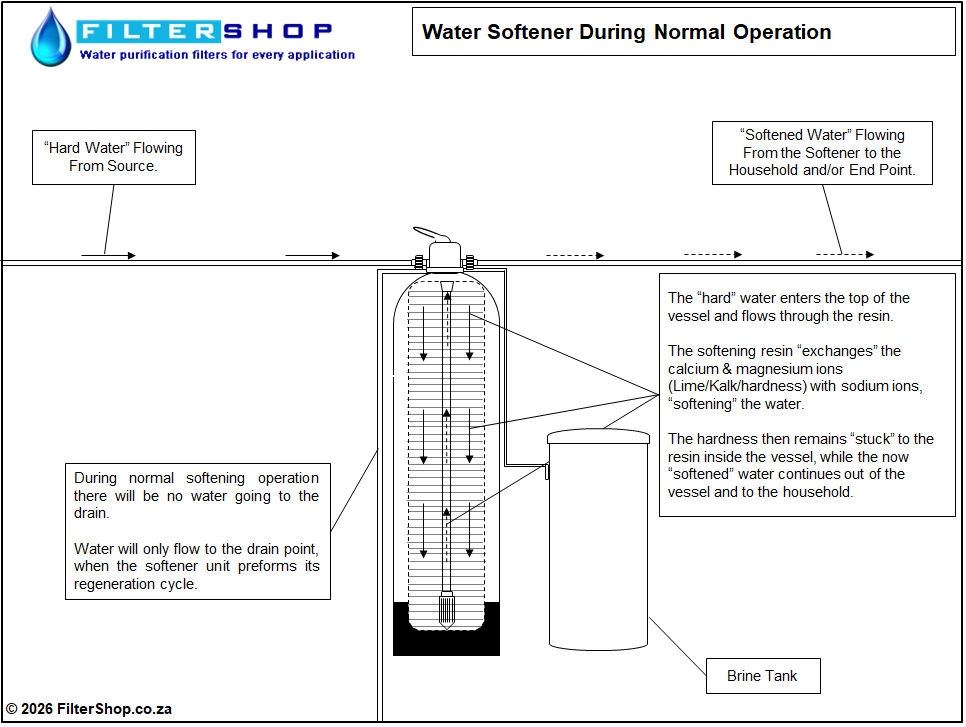
A water softener is essentially an ion exchange system, where one particular type of ion is being "swapped" with another ion type.
In the case of a water softener, it is exchanging the hardness ions (calcium & magnesium) for sodium ions.
The cation resin inside of the vessel is coated in sodium ions. When the hard water flows through the vessel, the sodium ions on the resin's surface will then exchange places with the hardness (calcium & magnesium ions). So the hardness “sticks” to the cation resin inside of the vessel, and the sodium ions continue on with the water.
What is the difference between Standard and "Food Grade" Softening Resin
The Budget Series Water Softener systems come with Standard softening resin, like most other softener systems on the market. However, you can upgrade the resin to "Food Grade" quality, like that used in our Bronze, Silver, and Gold Series softener units.
Similarities:
- Physically, the " Standard" and " Food Grade" Softening Resins are very similar; both are made of high-capacity, strong acid cation exchange resins (Bead form).
- Both Standard and Food Grade Resin can use coarse salt or Softener Salt Pellets as a source for the Sodium ions needed during regeneration.
Differences:
- The standard softening resin was traditionally designed for industrial and general-purpose applications such as boilers, cooling towers, etc. However, the manufacturing quality control & limits are not as strictly adhered to. This can result in a "plastic-like" taste and /or odour for several weeks after installation (despite backwashing & regeneration), due to organic " leachables" coming off of the standard resin.
- Whereas the "Food Grade" resin is designed specifically for food, beverage, and pharmaceutical applications. The "Food Grade" resin is manufactured to meet stringent safety standards. The resin is tested to ensure that "organic extractives" are kept at an extremely low level, before the resin leaves the factory. This is why we strongly recommend using " Food grade" Softening resin in applications where the water will be used for drinking, and/or in food preparation.
What size Softener should I get?
The Budget Series Water Softeners come in 4 sizes:
- 25 Litre Budget Series Water Softener (Maximum Flow rate: 500LPH @ 200PPM Hardness*)
- 50 Litre Budget Series Water Softener (Maximum Flow rate: 1000LPH @ 200PPM Hardness*)
- 75 Litre Budget Series Water Softener (Maximum Flow rate: 1500LPH @ 200PPM Hardness*)
- 100 Litre Budget Series Water Softener (Maximum Flow rate: 2000LPH @ 200PPM Hardness*)
Not sure which size softener to get for your water and application? Contact Filtershop, and we will be happy to guide you on the best size unit for your application.
*While the softener does have a liter per hour flow rating, this is only meant as a guide and is for situations where the Hardness level is 200ppm or lower. The fact is that all the water softeners can handle similar flow rates, the difference will be with the effectiveness of the hardness removal and the regularity of the regeneration cycles at higher flow rates.
- Keep in mind that getting your water test before having a softener put in place, will always help to insure that you are putting the right size in place, and the test may also indicate that some additional filtration alongside the water softener may be required.
The larger the water softener vessel, the more cation resin it will contain, the longer the time before the resin becomes saturated and requires regeneration.
In situations with very high hardness (kalk/lime) levels, it is recommended to go with the largest of the water softeners. Otherwise, with the smaller water softeners, you will regenerate on a very regular basis. All the smaller amount of cation surface area in the small water softeners means fewer places from hardness to be captured and so it will reduce the effectiveness of the softener.
**Please note that larger Softeners are available on request. Please get in touch with Filtershop, either by phone, email, or via our WhatsApp line.
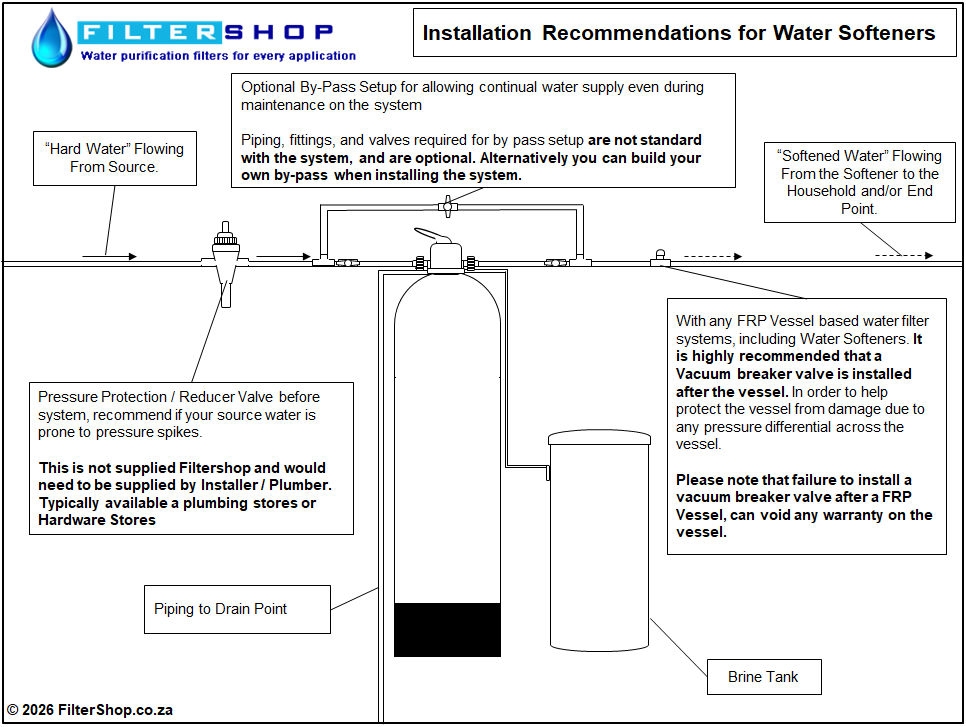
How to install a water softener
F116Q1 Automatic Valve Head
The Budget Series of water softeners uses the Runxin F116Q1 Automatic Softener Valve head. The F116Q1 valve head's settings allow you to set the regeneration cycle to be "triggered" after a set time (for example, every 5 days).
*Please note that the F116Q1 Valve head does not measure or keep track of how many litres (and/or Gallons) have gone through the softener systems.
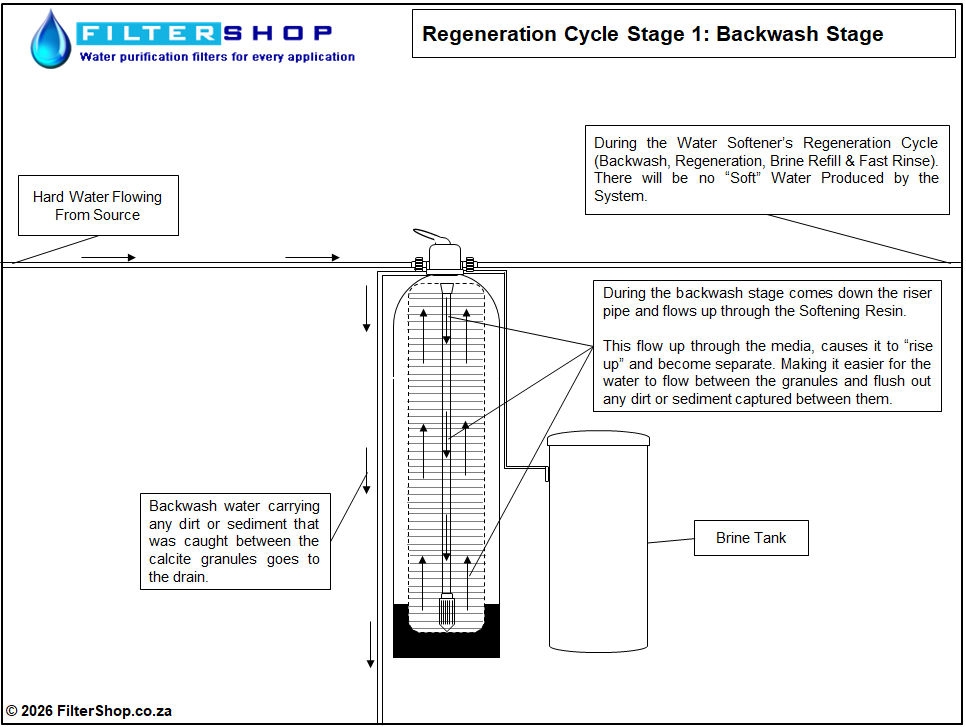
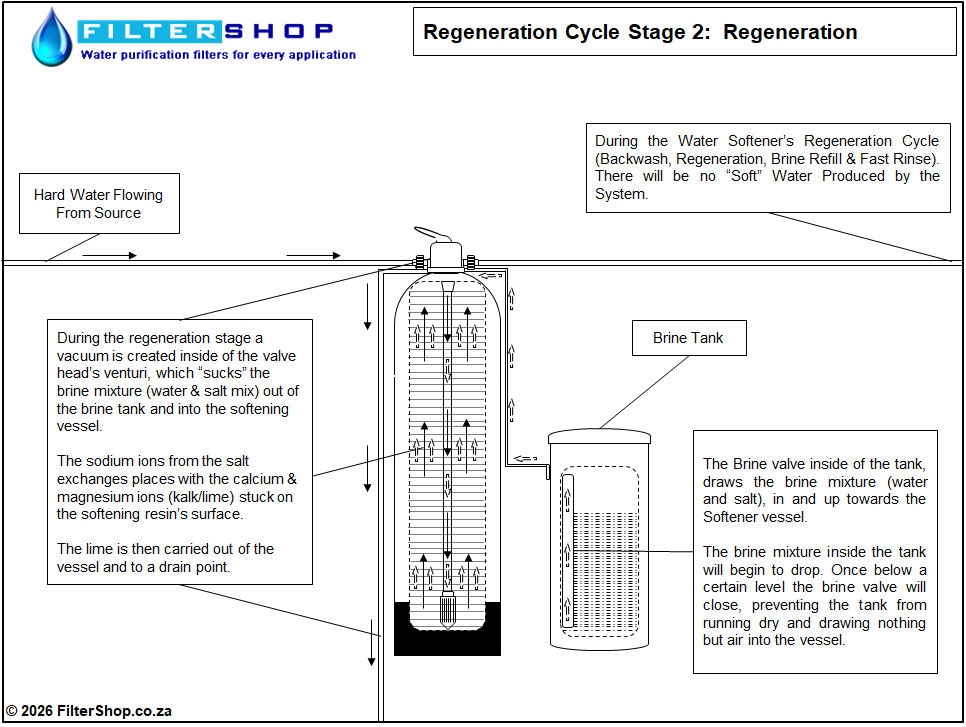
What are the stages of the Regeneration cycle?
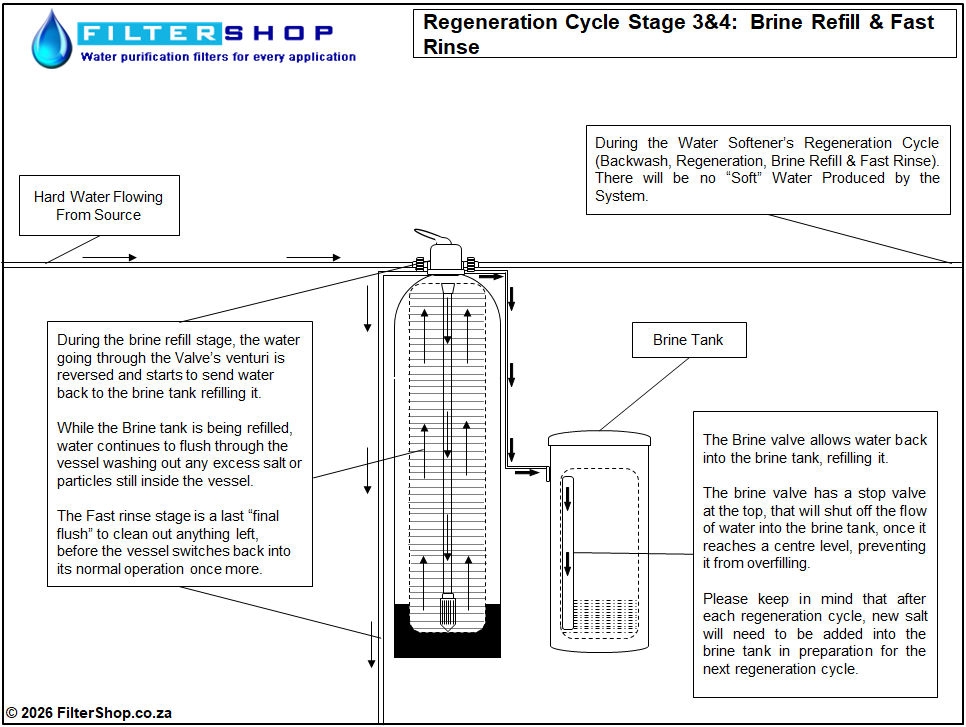
The water softener will then run a regeneration cycle, where the hardness on the cation resin is flushed out of the unit, and the cation resin is then recoated with sodium ions.
Salt is used during the regeneration process as a source of sodium ions, to flush off the hardness and re-coat the resin. There is a misconception that water softeners add salt to the water; however, this is not the case.
Keep in mind, a properly installed and functioning water softener should never make water that does not already have a salty (brackish) taste suddenly taste salty.
Once the regeneration process is completed, the Brine tank will need to be topped up with Salt, in preparation for the next regeneration cycle.
How often the regeneration cycle needs to be run, and how many kgs of Salt will be required, will differ application to application. The level of hardness in the water, as well as the total flow rate requirements, will also have an influence.
To help spec the correct size softener, as well as how much salt you will need for a regeneration cycle, as well as how often, Please Contact Filtershop, and our sales technicians will be able to assist you further.
Warranty*:
The Bronze Series Water Softeners come with a 1-year* Warranty. Please note that the warranty does not cover the resin or salt pellets, as their life span is completely dependent on the quality of the source water and how regularly the regeneration cycle has been run.
*Please note that the warranty does not cover damage caused by mishandling, improper installation, or in situations where the max operating parameters for the product are exceeded.
**Please note, with any FRP Vessel-based water filter systems, including Water Softeners. It is highly recommended that a Vacuum breaker valve be installed after the vessel. To help protect the vessel from damage due to any pressure differential across the vessel. Failure to install a vacuum breaker valve after a FRP Vessel will void the vessel's warranty.
***The Water Softener's Components are rated for a maximum pressure of 6 bar (90psi). If your source water has higher pressure or is prone to "water hammering" ( pressure spikes), it is strongly recommended that a pressure regulator/reducer be installed before the system. Failure to do so will void any warranty on the components for any damage caused by water pressure.
Keep in Mind:
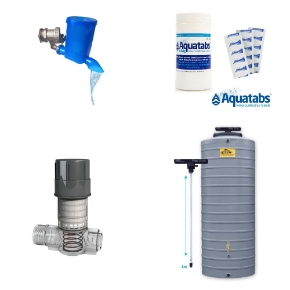
- The softening Resin inside the water softener is very sensitive to Chlorine and turbidity (dirt, sediment, particles). Failure to remove these before the water enters the water softener will lead to damage to the softening resin and a reduced lifespan. In the case of municipal water, a pre-filter such as a Triple Big Blue system is installed before the softener to remove sediment, dirt, and chlorine before the softener unit.
- Other elements in water, such as Nitrates or Iron, can reduce the effectiveness and life span of the softening resin. This is why it is strongly recommended that you have the source water fully tested before installing a water softener. If a source water has not been properly tested, Filtershop can offer no guarantees on the effectiveness of the water softener or the lifespan of its resin.
Fitting Combination Options: Pressure Gauges, Flow Meter (Rotameter), and By-pass piping
There are several different fittings and additions that can be added to the Filtration Vessel System, including a By-pass, Inlet and outlet Pressure Gauges, as well as a 250-2500LPH Flowmeter (Rotatmeter).
These additions are available in several combinations. Please see below for information on the different components and fitting options.
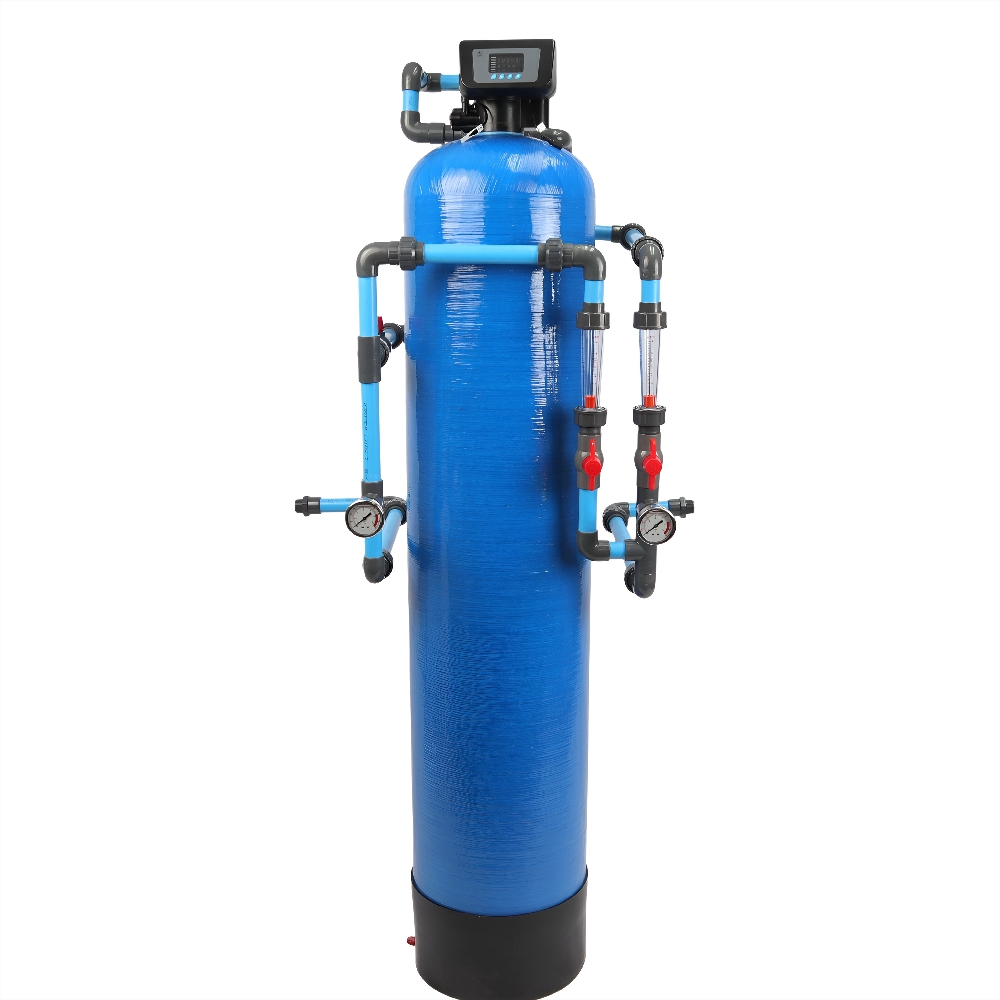
*Please note that the picture above is just to illustrate an example of the pipe work used for a fitting combination setup. Depending on the system type and the fitting options selected the pipe work on your system will likely appear different.
**Please note that these additional fitting combinations are built to order, and construction time is 2 to 3 working days from when payment has been received.
By-Pass Piping
Adding a bypass to the system allows you to divert the flow of water around the system if you need to conduct maintenance on the system.
However, in the case of a water softener system, the bypass also allows you to control how much of the total flow is going through the water softener, and how much is bypassing the system. This is an advantage when you do not want to remove all the hardness from the water.
The reason you may not want to strip all the hardness from a source water, is that the hardness (calcium & magnesium) also acts as a "buffer," helping to raise the PH. So if you remove all traces of the hardness in a source water, then there is the potential that the water will become corrosive (acidic), and start causing corrosion issues in the pipe, geysers, or fittings. This is why Ideally you want to leave only a small amount of hardness present in the water (ideally less than 60ppm), to act as a buffer, and help to avoid the water becoming corrosive.
Filtershop uses ceramic ball valves on our bypasses for our water softener systems. These cermaic ball valves are These ceramic ball valves are corrosion-resistant.
Water Pressure Gauges
The pressure gauge allows you to monitor the pressure of the incoming source water.
This helps you to see if the water pressure coming is high enough for an adequate flow pressure through the vessel (minimum 1 bar for water softeners).
Alternatively, the pressure gauge will indicate if the water pressure is too high for the Vessel and components (maximum of 6 bar). In which case, you should then install a pressure-regulating valve before the filter system.
Flow Meter (Rotameter) 250 to 2500LPH
The Flow Meter (Rotameter) allows you to see how much draw (flow rate) is growing through the filter system at a particular time and helps to give you an idea of how many litres per hour (LPH) you are using at a given time. For Example, flow rate (LPH) in a household when one versus two showers are running.
Additional Options:
Canvas Protective Cover for Runxin Valve Head
The canvas protective cover slides over the top of the valve head, helping to protect it from moisture and dust. The canvas cover has a clear plastic front, so you can see the valve's LED display without needing to remove the cover.


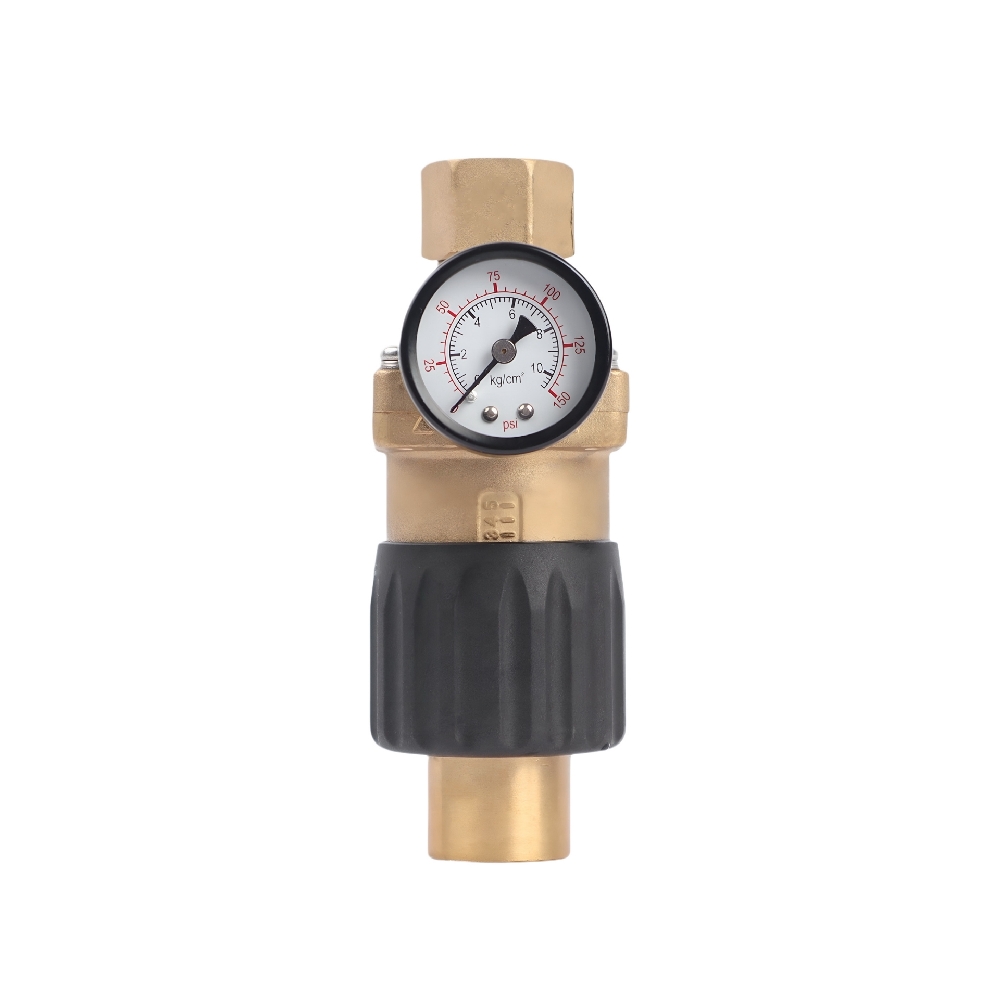
Runxin Brass Reducing Valve with Pressure Gauge
The Runxin PRV is designed to automatically reduce a higher inlet pressure to a steady lower downstream pressure, regardless of fluctuations in flow rate or inlet pressure. This ensures that downstream components receive water at a consistent pressure, enhancing system efficiency and longevity.
Constructed with high-quality materials, the valve offers durability and resistance to corrosion, making it suitable for long-term use in various environments. Its compact design allows for easy integration into existing systems without requiring significant modifications.
The valve operates effectively within a pressure range of 2 to 6 bar (0.2 to 0.6 MPa) and a temperature range of 5°C to 50°C, accommodating a wide array of water treatment applications. Whether used in reverse osmosis (RO) systems, filtration setups, or general water supply networks, the Runxin PRV delivers reliable performance.
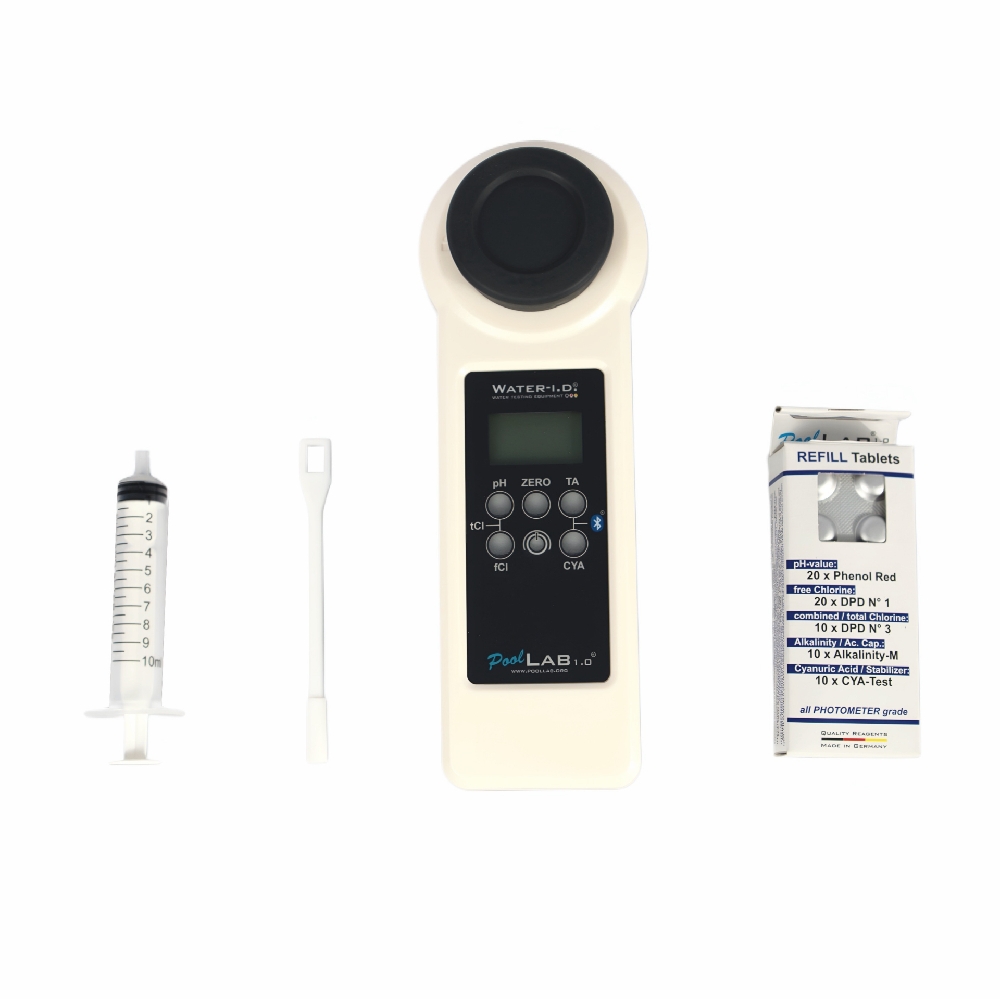
PoolLab 1.0 Photometer - Digital Water Testing Device
Introducing the PoolLab 1.0 Photometer, a professional-grade, handheld device designed for comprehensive pool and spa water analysis. This versatile photometer enables accurate measurement of up to 13 essential water parameters, ensuring optimal water quality and safety.
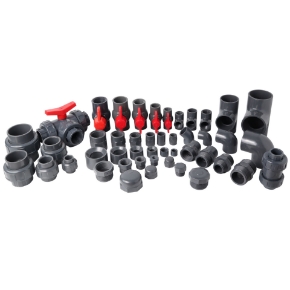
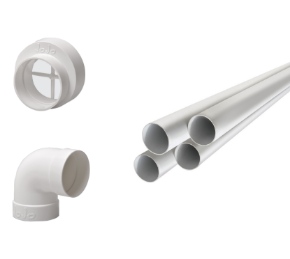
PVC Threaded and Glue Fittings
PVC(Polyvinyl chloride) fittings are used to connect sections of pipes or tubes, adapt to different sizes or shapes, and control the flow of water. There are two predominant types of PVC fittings, namely PVC Glue Fittings and PVC Threaded Fittings. The difference between the two is that PVC Glue Fittings result in permanent joints and PVC Threaded Fittings are semi-permanent and can be replaced. PVC Glue fittings are joined with primer and cement- a chemical solvent that melts the surface of the PVC and then quickly re-hardens to fuse the pieces together. This results in an airtight, leak-proof bond similar to what you get with welding metal. An example of such a fitting is a PVC Glue Reducing Socket, which is used to join together two pieces of PVC pipes with different diameters. Another example would be a 90 Degree Elbow which is used to connect two pipes of the same diameter at an angle of 90 degrees.PVC Threaded fittings utilise a simple threaded connection whereby replaceable 'male threaded' are screwed into 'female threaded'.Male threads have a thread on the outside of the fitting and female threads have a thread on the inside. When you thread the fitting in, it compresses against the other threads.PTFE tape is used to thread these together and the proper way to assemble threaded fittings is to finger-tighten, then add one to two turns but no more. An example of a threaded fitting is a Reducing Nipple Male Threaded which is used to connect between two female threads of different diameters.
Link To PVC Fittings